The Best Peach Cake Recipe (Moist, Fresh Peaches, No Soggy Center)
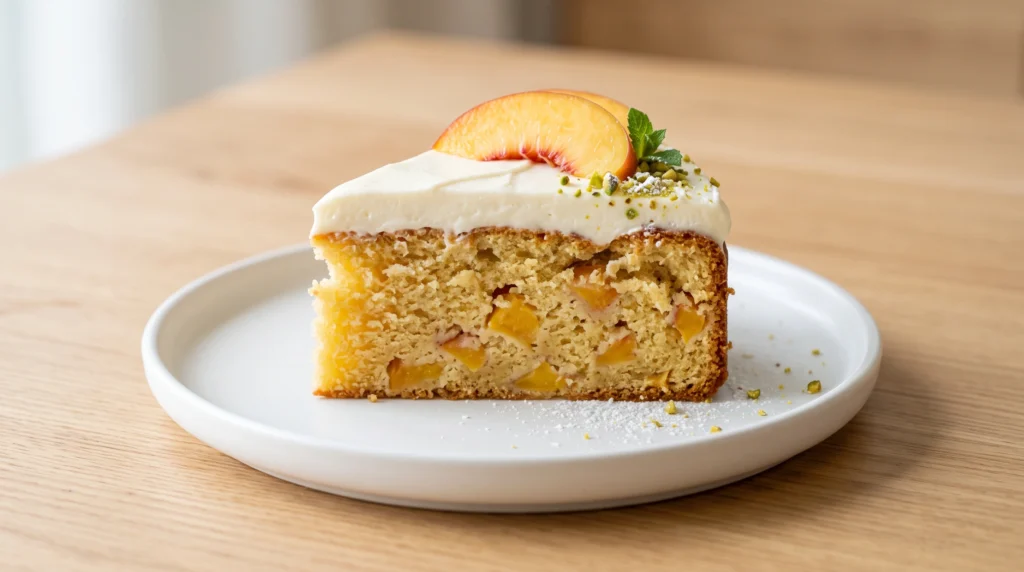
The first time I made peach cake, I sliced into it expecting a beautiful cross-section of fruit throughout, and instead found every single piece of peach sitting in a soggy layer at the bottom. The top two-thirds of the cake was peach cake in name only. This homemade peach cake fixes that exact problem, a moist, tender summer cake loaded with fresh peaches that actually stay suspended through every slice.
Why You’ll Love This Peach Cake
- Peaches that don’t sink. Most homemade peach cake recipes end up with all the fruit at the bottom. This recipe explains exactly why that happens and how to stop it.
- A true taste of peach season. Nothing beats a peach cake made with peaches at their sweetest, ripest peak.
- Soft, moist crumb. Sour cream and a mix of butter and oil give this peach cake a tender texture that holds up beautifully around the fruit.
- Works in four formats. Layer cake, sheet cake, Bundt, or cupcakes, all from the same base.
- A genuine summer showstopper. Potlucks, backyard barbecues, or a Sunday dessert that makes the most of a full basket of peaches.
What You Need
For the Cake
- 2 3/4 cups (345g) cake flour
- 1 tablespoon baking powder
- 1/2 teaspoon baking soda
- 1/2 teaspoon salt
- 1/2 cup (113g) unsalted butter, softened
- 1/3 cup (80ml) neutral oil (vegetable or canola)
- 1 1/2 cups (300g) granulated sugar
- 3 large eggs, room temperature
- 1 cup (240g) full-fat sour cream, room temperature
- 1 teaspoon vanilla extract
- 1/2 teaspoon cinnamon
- 2 cups (about 3 medium) fresh peaches, peeled and diced, plus extra sliced peaches for topping
For the Cream Cheese Frosting (Optional)
- 8 ounces cream cheese, softened
- 1/2 cup (113g) unsalted butter, softened
- 3 cups (360g) powdered sugar, sifted
- 1 teaspoon vanilla extract
- Pinch of salt
A Quick Note on Peaches
Fresh, ripe peaches make the best peach cake, but ripeness matters more than most recipes admit. A peach that’s ready to use should give slightly to gentle pressure near the stem and smell noticeably sweet. If your fresh peaches are underripe or bland, canned peaches (well drained and blotted dry) will actually give you a better result than a mealy fresh one. Frozen peaches work too, but only if fully thawed and blotted completely dry first, since the extra moisture from a half-frozen peach is one of the fastest ways to end up with a soggy peach cake.
Baking Tools I Actually Use
| Amount | Name | Notes |
|---|---|---|
| 1 | 9-inch springform pan or 9×13 pan | Springform for layer style, 9×13 for a crowd |
| 1 | KitchenAid stand mixer or hand mixer | For creaming and frosting |
| 1 | Digital kitchen scale | For accurate flour measurement |
| 1 | Peach corer and slicer | Speeds up prep significantly |
| 1 | Offset spatula | For smooth frosting application |
| 1 | Wire cooling rack | For cooling evenly |
| As needed | Parchment paper | For easy release |
The One Rule: Coat the Peaches, But Don’t Expect Magic
This is the single most avoidable mistake in every homemade peach cake, and it’s the one that got me on my first attempt.
Peaches are heavy and juicy compared to the batter around them, so as the cake bakes and rises, gravity pulls the fruit downward faster than the structure can hold it in place. According to Nigella Lawson’s official guidance on sinking fruit tossing fruit in a light coating of flour before folding it into the batter helps the fruit grip the surrounding mixture instead of sliding straight through it. This is why this peach cake recipe calls for tossing the diced peaches in a spoonful of the measured flour before folding them in.
That said, flour coating alone will not perform a miracle on something as dense and juicy as a peach. As Tasting Table’s breakdown of Julia Child’s fruit suspension technique points out, some fruits are simply too heavy for a coating trick to fully overcome, and a thicker, sturdier batter matters just as much as the flour toss itself. That’s why this recipe uses a substantial amount of sour cream and slightly less liquid than a typical vanilla cake, building a batter thick enough to actually hold the peaches in place rather than relying on flour alone to do all the work.
Step by Step Instructions
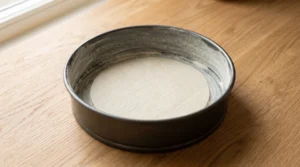
Step 1: Prep the Pan Preheat the oven to 350 degrees F. Grease and flour your pan, then line the bottom with parchment paper.
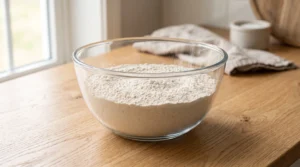
Step 2: Mix Dry Ingredients Whisk the cake flour, baking powder, baking soda, and salt together in a medium bowl. Set aside.
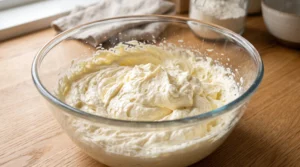
Step 3: Cream Butter, Oil, and Sugar In a stand mixer, beat the butter, oil, and sugar together on medium speed for a full 3 minutes until noticeably lighter and fluffy.
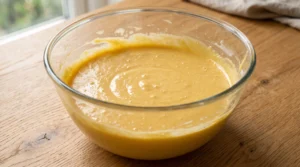
Step 4: Add Eggs Add the eggs one at a time, mixing until just combined after each.
Step 5: Add Sour Cream and Vanilla Mix in the sour cream, vanilla, and cinnamon until smooth.
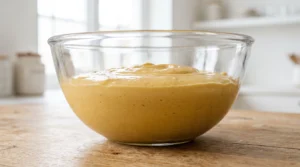
Step 6: Add the Flour With the mixer on low, add the flour mixture in three additions, mixing just until combined. The batter should be noticeably thick.
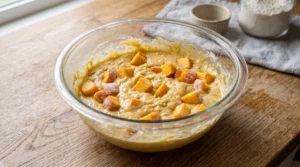
Step 7: Coat and Fold in the Peaches Toss the diced peaches in a spoonful of the reserved flour, then gently fold them into the batter by hand.
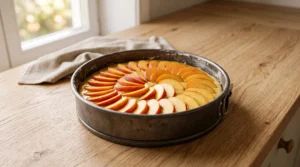
Step 8: Bake Pour the batter into the prepared pan, arrange the extra sliced peaches on top, and bake for 45 to 55 minutes, until a toothpick inserted in the center comes out clean.
Step 9: Cool Completely Cool in the pan for 15 minutes, then transfer to a wire rack to cool completely before frosting, if using.
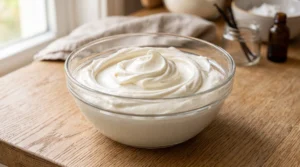
Step 10: Make the Frosting (Optional) Beat the cream cheese and butter together until smooth. Add the powdered sugar gradually, then mix in the vanilla and salt until fluffy.
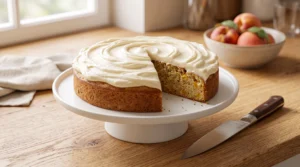
Step 11: Frost and Serve Once the cake is completely cool, spread the frosting evenly over the top with an offset spatula. Slice and serve.
Common Mistakes to Avoid
Even with ripe peaches and the right technique, a few small missteps can still leave this peach cake soggy or sunken, so here’s exactly what to watch for.
- Using underripe or watery peaches. Bland or overly firm peaches won’t give this cake the flavor it’s built for, and overly juicy, very ripe peaches need to be blotted dry before folding in.
- Skipping the flour coating. This one step meaningfully improves how evenly the peaches distribute through the cake.
- Using a thin, runny batter. A batter that’s too loose can’t support the weight of the fruit no matter how well it’s coated.
- Not draining canned or thawed peaches. Extra liquid is one of the fastest ways to end up with a soggy peach cake.
- Overmixing after adding the flour. This develops gluten and turns a light cake into a dense, tough one.
Variations
This peach cake recipe adapts easily depending on what your peach basket, or your schedule, calls for.
Peach Bundt Cake Pour all the batter into a well greased 12 cup Bundt pan, reducing the topping peaches to avoid overloading the center. Bake at 350 degrees F for 50 to 55 minutes.
Peach Cupcakes Dice the peaches smaller, then divide the batter into lined muffin tins and bake for 20 to 22 minutes. Makes about 22 cupcakes.
Spiced Peach Cake Add 1/4 teaspoon each of ginger and nutmeg alongside the cinnamon for a warmer, more autumnal flavor profile.
Peach Layer Cake Divide the batter between two 8-inch round pans and bake for 30 to 35 minutes, then fill and frost with the cream cheese frosting for a true layer cake presentation.
Dairy Free Peach Cake Substitute the sour cream with a dairy free yogurt alternative and use a dairy free butter substitute in place of regular butter.
Serving Ideas
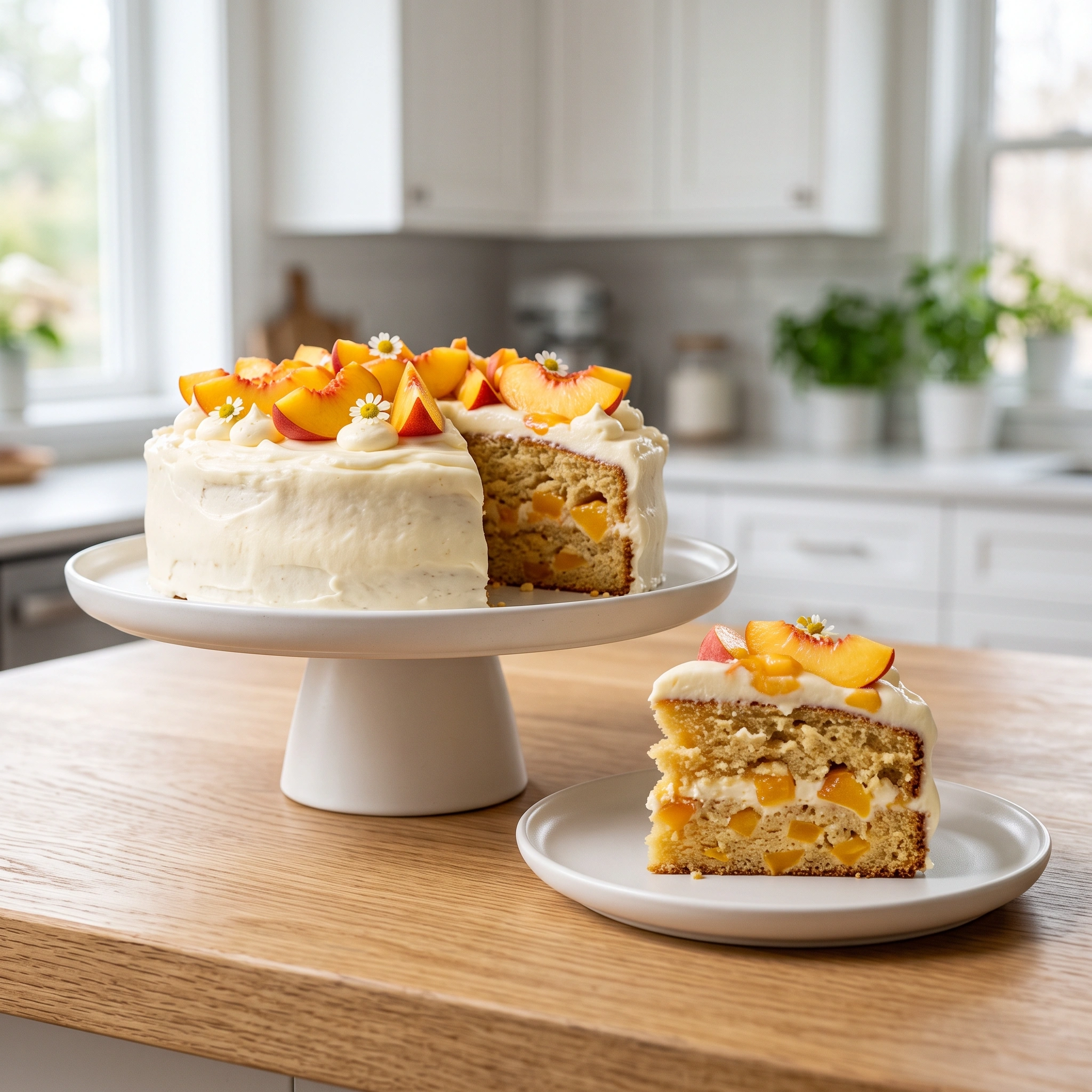
A few extra peach slices fanned across the top of this peach cake give it a rustic, bakery-style finish that shows off exactly what’s inside before the first slice is even cut. Serve warm with a scoop of vanilla ice cream for a true summer dessert, or at room temperature with a light dusting of powdered sugar if skipping the frosting.
This peach cake also travels well to potlucks and backyard barbecues, and it holds its own on a dessert table right alongside the site’s watermelon and strawberry summer desserts.
How to Store Peach Cake
Room temperature: Covered, this peach cake stays fresh for up to 2 days, especially if unfrosted.
Refrigerator: Store covered for up to 5 days, particularly if frosted with cream cheese frosting. Let it sit at room temperature for about 20 minutes before serving.
Freezer: Unfrosted peach cake wrapped tightly in plastic wrap and foil freezes well for up to 3 months. Thaw overnight in the refrigerator before frosting or serving.
The Best Peach Cake Recipe (Moist, Fresh Peaches, No Soggy Center)
Ingredients
Equipment
Method
- Preheat oven to 350 degrees F. Grease and flour the pan and line the bottom with parchment.
- Whisk the cake flour, baking powder, baking soda, and salt in a medium bowl. Set aside.
- In a stand mixer, beat the butter, oil, and sugar on medium speed for 3 minutes until light and fluffy.
- Add eggs one at a time, mixing until just combined after each.
- Mix in the sour cream, vanilla, and cinnamon until smooth.
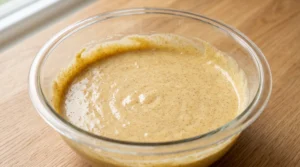
- With the mixer on low, add the flour mixture in three additions, mixing just until combined.
- Toss the diced peaches in a spoonful of reserved flour, then gently fold into the batter.
- Pour into the prepared pan, top with extra sliced peaches, and bake for 45 to 55 minutes, until a toothpick comes out clean.
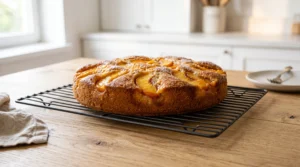
- Cool in the pan for 15 minutes, then transfer to a wire rack to cool completely.
- If using, beat the cream cheese and butter until smooth, add powdered sugar gradually, then mix in vanilla and salt until fluffy.
- Once the cake is completely cool, spread the frosting evenly over the top with an offset spatula, then slice and serve.
Notes
- Toss peaches in flour before folding in to help them stay suspended.
- Use ripe, fragrant peaches for the best flavor. Bland or underripe fresh peaches should be swapped for well-drained canned peaches.
- Keep the batter thick. A batter that’s too thin cannot support the weight of the fruit.
- Store refrigerated up to 5 days if frosted. Bring to room temperature before serving.
Frequently Asked Questions
Why did my peach cake sink or turn soggy in the middle? This usually comes from underdrained or overly juicy peaches, a batter that’s too thin to support the fruit, or skipping the flour coating step that helps the peaches grip the batter.
Can I use canned or frozen peaches instead of fresh? Yes. Canned peaches should be well drained and blotted dry, and frozen peaches should be fully thawed and blotted dry as well, since excess moisture is the main cause of a soggy peach cake.
How do I know if my peaches are ripe enough? A ripe peach gives slightly to gentle pressure near the stem and has a noticeably sweet smell. If it feels rock hard or smells like nothing, it needs more time.
Do I need to peel the peaches? Peeling gives a smoother texture throughout the cake, but the skins can be left on if you prefer a more rustic result or are short on time.
Can I make this cake ahead of time? Yes. Bake it up to 2 days ahead, wrap it tightly, and store at room temperature if unfrosted, or refrigerate if frosted.
Can I use this recipe with other stone fruit? Yes, plums, nectarines, or apricots can be substituted using the same weight and the same flour coating technique.
Do I need cake flour, or will all purpose work? All purpose flour works, but cake flour produces a noticeably softer, more delicate crumb that better matches a bakery-style peach cake.
How far ahead can I make the cream cheese frosting? Up to 3 days ahead, stored in an airtight container in the fridge. Bring it to room temperature and re-whip briefly before using.
The Story Behind Peach Cake
Peaches have been grown in the American South since Spanish colonists first introduced them in the 1500s, and by the 19th century, states like Georgia and South Carolina had built entire regional identities around peach farming, with Georgia eventually earning its nickname as the Peach State. Peach cake grew directly out of that agricultural abundance, a practical, no-waste way for home bakers to use up baskets of ripe peaches at the height of a short summer season before the fruit went bad.
That same tradition carries through today. This homemade peach cake keeps that same spirit of a simple, generous summer cake built entirely around fruit at its peak, minus the guesswork of watching all that fruit sink straight to the bottom.