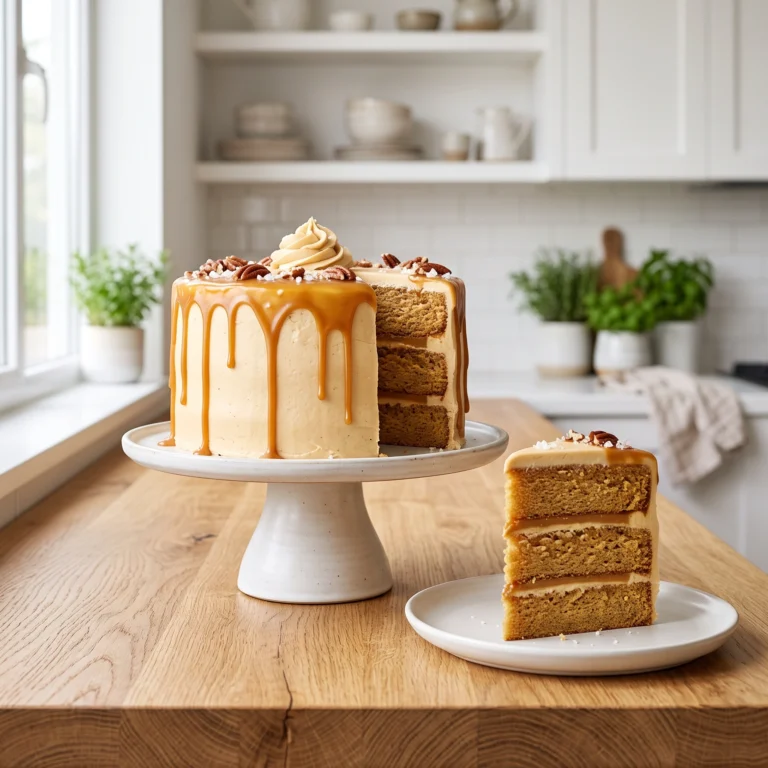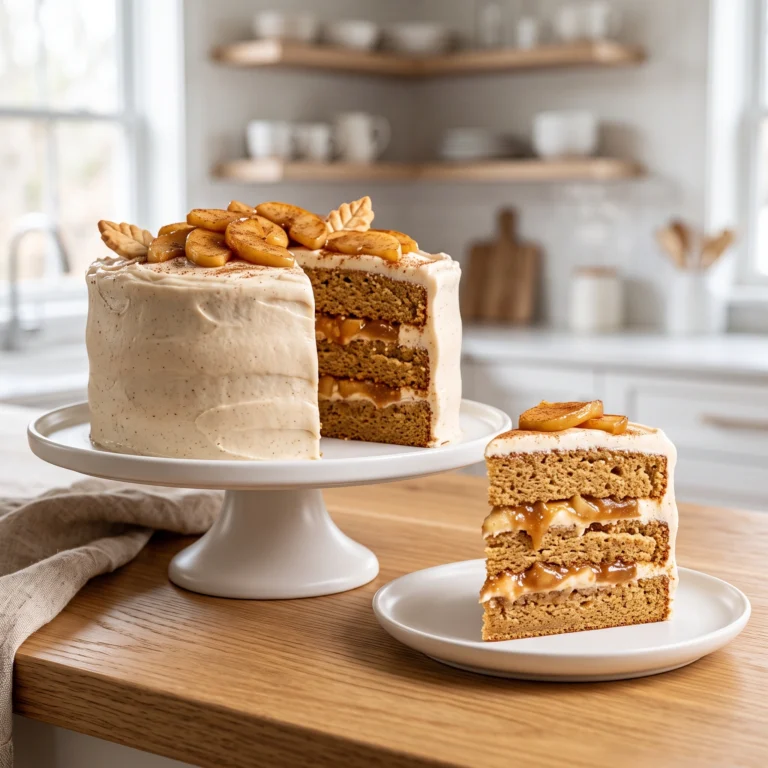
The Best Chai Pudding Cake Recipe (Self-Layering, Custard Base)
The first time I made this cake, I whipped the egg whites into the batter until everything looked perfectly smooth and uniform, assuming that was the goal. It baked into one plain, dense spice cake with no custard layer in sight. This homemade chai pudding cake fixes that exact mistake, a single batter that bakes into a soft spiced sponge on top and a creamy chai custard underneath, no ramekins full of separate components required.
Why You’ll Love This Chai Pudding Cake
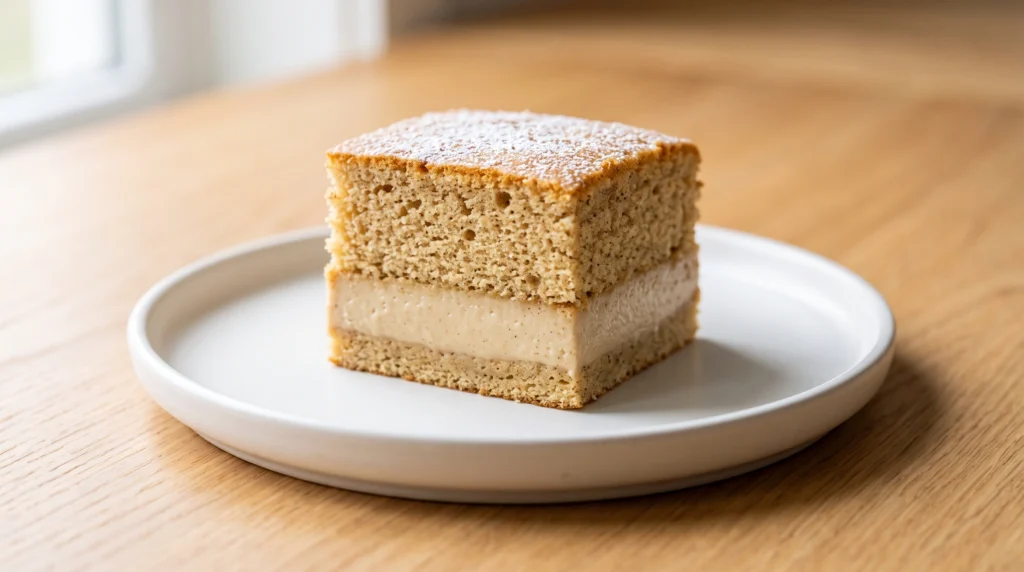
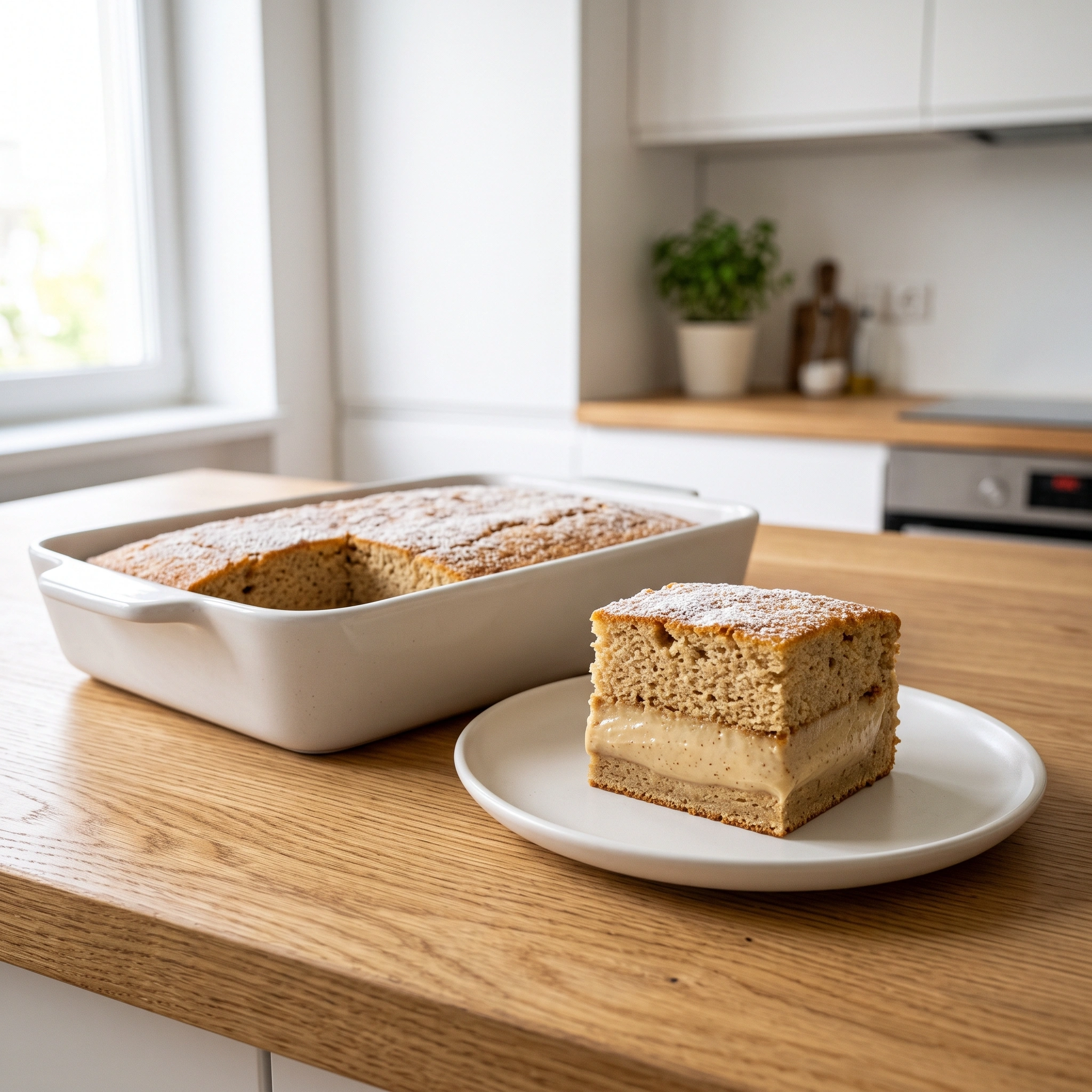
- One batter, two layers. No custard to make separately and no assembly required, this chai pudding cake does the layering work in the oven.
- Real, well-rounded chai flavor. Steeped chai tea in the milk plus a full spice blend gives this cake far more depth than most versions that only use one or the other.
- A genuine conversation piece. Few desserts get the same reaction as slicing into a cake that reveals a custard layer nobody assembled by hand.
- Warmly spiced, not overwhelming. Cardamom, cinnamon, ginger, and cloves balance the black tea base without turning into a spice bomb.
- A cozy, low-effort showstopper. Perfect for a fall dinner party dessert that looks far more complicated than it actually is.
What You Need
For the Chai Pudding Cake
- 1 1/2 cups (360ml) whole milk
- 3 tablespoons loose leaf black chai tea, or the contents of 4 to 5 chai tea bags
- 4 large eggs, separated, room temperature
- 3/4 cup (150g) granulated sugar, divided
- 1/3 cup (75g) unsalted butter, melted and cooled
- 3/4 cup (95g) all-purpose flour
- 1 teaspoon cinnamon
- 1/2 teaspoon ground cardamom
- 1/2 teaspoon ground ginger
- 1/4 teaspoon ground cloves
- 1/4 teaspoon salt
- 1 teaspoon vanilla extract
- Powdered sugar, for dusting
A Quick Note on the Chai Flavor
This chai pudding cake gets its flavor from two sources working together rather than relying on just one. The milk is steeped with strong black tea to infuse the custard layer directly, while the full spice blend goes into the batter itself for the sponge layer. Using both methods, rather than just steeped milk or just dry spices on their own, is what gives this cake noticeably more chai depth than a version that only relies on one.
Baking Tools I Actually Use
| Amount | Name | Notes |
|---|---|---|
| 1 | 8-inch square or 9-inch round baking dish | For the classic pudding cake shape |
| 1 | KitchenAid stand mixer or hand mixer | For whipping the egg whites |
| 1 | Oven thermometer | This recipe depends on accurate oven temperature |
| 1 | Fine mesh strainer | For straining the steeped tea leaves out of the milk |
| 1 | Large roasting pan | For the water bath |
| 1 | Digital kitchen scale | For accurate flour measurement |
The One Rule: Don’t Fully Mix In the Egg Whites
This is one of the most common mistakes when making chai pudding cake, and it’s exactly what went wrong on my first attempt.
This cake works because its batter has a much higher liquid-to-flour ratio than a standard cake, this batter is much thinner and more fluid than a standard cake batter, which is essential to the way the layers form during baking, according to Emmymade’s breakdown of how magic custard cake actually works. That thin, watery batter is exactly what allows the layers to separate as it bakes, with the dense custard settling toward the bottom while the lighter, airier components rise to the top, aided by a lower oven temperature that gives everything time to settle before it sets.
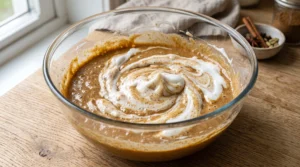
The part that trips up most first attempts, though, is the egg whites. According to JoCooks’ troubleshooting guide for magic cake fully incorporating the whipped egg whites into the batter is the single most common cause of a cake that fails to separate into layers, since a completely smooth, uniform batter has no density differences left to separate in the first place. You need to still see visible white streaks in the batter when it goes into the pan. It looks unfinished, but that’s exactly the point, folding the egg whites in only partway is what preserves the density gradient the whole technique depends on.
Step by Step Instructions
Step 1: Steep the Chai Milk Heat the milk in a small saucepan until just steaming, but not boiling. Remove from heat, add the loose tea or tea bags, and steep for 15 minutes. Strain out the tea leaves or bags, then let the milk cool to room temperature.
Step 2: Prep the Pan Preheat the oven to 325 degrees F. Grease an 8-inch square or 9-inch round baking dish and set it inside a larger roasting pan.
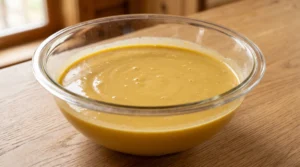
Step 3: Whisk the Yolks In a large bowl, whisk the egg yolks with half the sugar (about 6 tablespoons) until pale and slightly thickened. Whisk in the melted butter, then the cooled chai milk and vanilla.
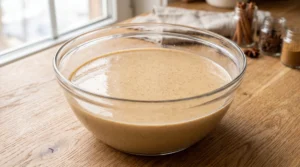
Step 4: Add the Dry Ingredients Sift the flour, cinnamon, cardamom, ginger, cloves, and salt into the yolk mixture. Whisk until smooth. The batter will be quite thin, which is normal.
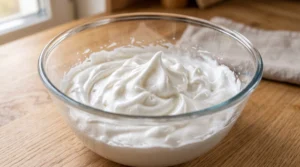
Step 5: Whip the Egg Whites In a clean, dry bowl, beat the egg whites until foamy. Gradually add the remaining sugar and beat until soft peaks form, not stiff peaks.
Step 6: Fold, But Not Completely Add about a third of the egg whites to the batter and whisk to lighten it. Gently fold in the remaining egg whites with a spatula, stopping while visible white streaks are still showing throughout the batter. Do not mix until smooth.
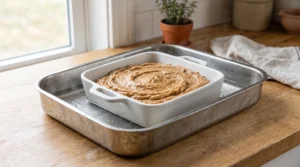
Step 7: Bake in a Water Bath Pour the batter into the prepared dish. Carefully pour hot water into the roasting pan until it reaches about halfway up the sides of the baking dish. Bake for 45 to 50 minutes, until the top is lightly golden and set but still slightly jiggly in the center.
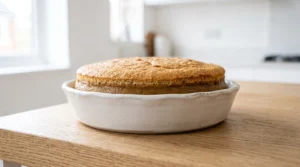
Step 8: Cool Completely Remove the dish from the water bath and let the cake cool completely at room temperature, then refrigerate for at least 2 hours before slicing. The custard layer needs this time to fully set.
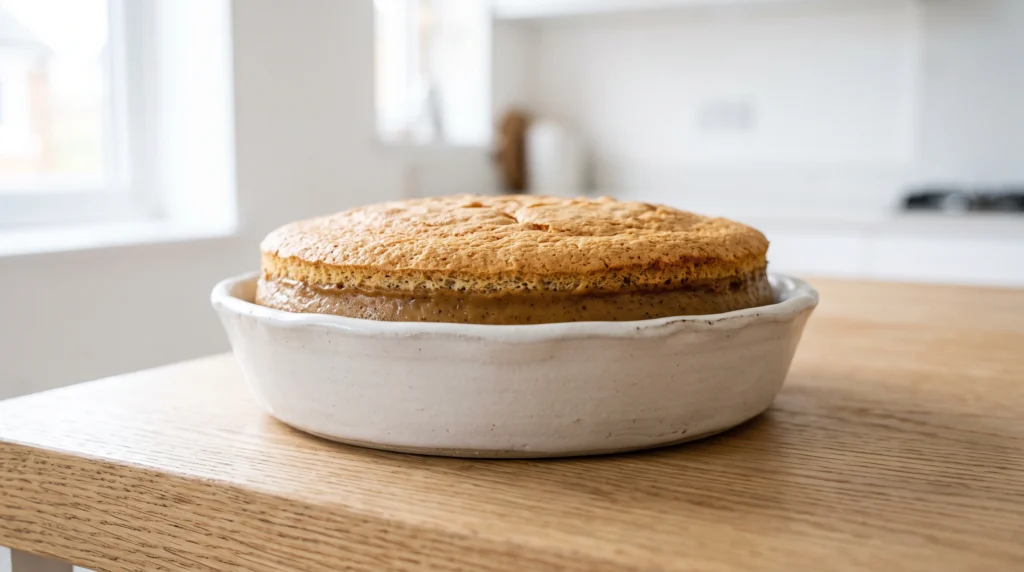
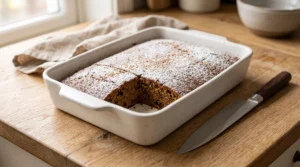
Step 9: Dust and Serve Dust generously with powdered sugar just before serving.
Common Mistakes to Avoid
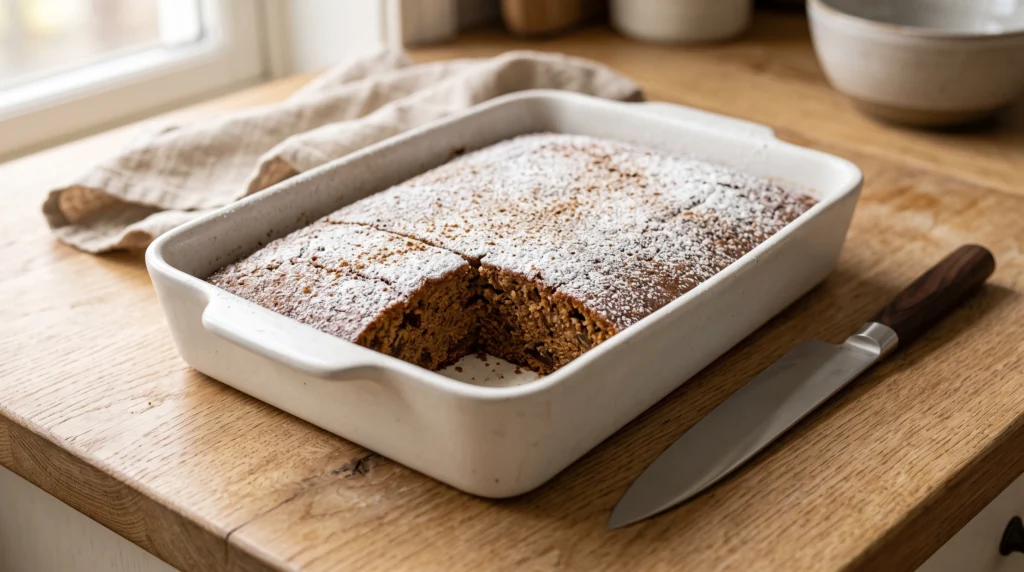
Even with the right ratios, a few small missteps can still leave this chai pudding cake as one uniform layer instead of two distinct ones, so here’s exactly what to watch for.
- Fully incorporating the egg whites. This is the single biggest cause of a chai pudding cake that doesn’t separate.
- Skipping the water bath. It regulates the baking temperature and helps the custard set gently instead of curdling.
- Baking at too high a temperature. A hotter oven sets the structure too fast for the layers to form properly.
- Slicing while still warm. The custard layer needs to fully chill and firm up, or it collapses when cut.
- Using only one chai flavor method. Skipping either the steeped milk or the dry spice blend results in a noticeably weaker chai flavor.
Variations
This chai pudding cake recipe adapts easily if you want to shift the format or flavor slightly.
Individual Chai Pudding Cakes Divide the batter among 6 to 8 ramekins set in a water bath and bake for 30 to 35 minutes, adjusting time based on size.
Vanilla Chai Pudding Cake Reduce the spice blend by half and increase the vanilla extract to 2 teaspoons for a milder, more vanilla-forward version.
Dirty Chai Pudding Cake Add 1 tablespoon of instant espresso powder to the steeped chai milk for a coffeehouse-inspired twist.
Chocolate Chai Pudding Cake Replace 2 tablespoons of the flour with cocoa powder for a subtle chocolate note underneath the chai spice.
Gluten Free Chai Pudding Cake Substitute a 1:1 gluten free flour blend for the all-purpose flour, keeping all other ratios the same.
Serving Ideas
A dusting of powdered sugar and a light sprinkle of extra cinnamon over the top gives this chai pudding cake all the finishing touch it needs, since the layers underneath already do the visual work once it’s sliced. Serve chilled straight from the fridge, or let it sit at room temperature for about 15 minutes if you prefer the custard layer slightly softer.
This chai pudding cake works beautifully as a fall dinner party dessert, since it can be made a day ahead and looks far more impressive than the actual effort required, and it pairs naturally with a cup of the same chai tea used to make it.
How to Store Chai Pudding Cake
Room temperature: Not recommended given the custard layer. Refrigeration is required.
Refrigerator: Store covered for up to 4 days. The custard layer actually firms up nicely over the first day, making this a genuinely good make-ahead dessert.
Freezer: Not recommended. The custard layer’s texture doesn’t hold up well after freezing and thawing.
The Best Chai Pudding Cake Recipe (Self-Layering, Custard Base)
Ingredients
Equipment
Method
- Heat the milk until steaming, remove from heat, and steep the tea for 15 minutes. Strain and cool to room temperature.
- Preheat oven to 325 degrees F. Grease a baking dish and set it inside a larger roasting pan.
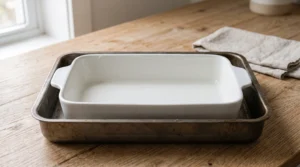
- Whisk the egg yolks with half the sugar until pale and thickened. Whisk in the melted butter, then the cooled chai milk and vanilla.
- Sift in the flour, cinnamon, cardamom, ginger, cloves, and salt. Whisk until smooth. The batter will be thin.
- Beat the egg whites until foamy, gradually add the remaining sugar, and beat to soft peaks.
- Fold a third of the egg whites into the batter to lighten it, then gently fold in the rest, stopping while white streaks are still visible.
- Pour into the prepared dish. Add hot water to the roasting pan until halfway up the sides of the baking dish. Bake for 45 to 50 minutes, until the top is set but slightly jiggly in the center.
- Cool completely, then refrigerate at least 2 hours before slicing.
- Dust with powdered sugar just before serving.
Notes
- Do not fully mix in the egg whites. Visible white streaks in the batter are required for the layers to form.
- Don’t skip the water bath, it regulates the temperature so the custard sets properly.
- Chill for at least 2 hours before slicing, or the custard layer will collapse.
- Store refrigerated up to 4 days.
Frequently Asked Questions
Why didn’t my chai pudding cake separate into layers? This almost always comes from fully mixing the egg whites into the batter until smooth. You need to still see visible white streaks when the batter goes into the pan for the layers to form properly.
Can I make this cake ahead of time? Yes, and it’s actually recommended. This cake needs at least 2 hours of chilling before slicing, and it holds up well in the fridge for several days after that.
Do I need a water bath? Yes. The gentle, humid heat helps the custard set gradually instead of overheating at the edges while the center is still loose, which allows the custard layer to set gently instead of curdling or overcooking.
Can I use chai tea bags instead of loose leaf tea? Yes, 4 to 5 tea bags steeped in the hot milk work just as well as loose leaf tea for this recipe.
Why is my batter so thin? This is completely normal. The high liquid-to-flour ratio is exactly what allows the cake to separate into distinct layers as it bakes.
Can I double this recipe for a bigger pan? Yes, but use a wider dish rather than a deeper one, since a thicker batter takes considerably longer to fully set and may not separate as cleanly.
Is this the same as a regular chai spice layer cake? No. A standard chai layer cake is a normal sponge cake with chai flavoring, while this chai pudding cake is a completely different technique that self-separates into a sponge top and custard base from one thin batter.
Can I make this dairy free? Full-fat coconut milk can be substituted for the whole milk, though the custard layer’s texture will be slightly different from the dairy version.
The Story Behind Pudding Cakes and Chai
This style of cake, often called magic cake or magic custard cake, traces back to a French dessert from the Charentes region called gâteau magique, itself rooted in an older rustic dish called millasson. The technique of folding whipped egg whites into a thin batter to create self-separating layers spread from there into countless variations across home baking communities, each one swapping in different flavors while keeping the same basic method.
Chai itself has its own much older history, with masala chai originating in India as a blend of black tea, milk, sugar, and warming spices like cardamom, cinnamon, ginger, and cloves. As chai lattes became a mainstream cafe staple across the United States, that same warm spice profile made its way into countless baked goods. This chai pudding cake brings those two traditions together, the French magic cake technique and the flavor of Indian masala chai, into one dessert built specifically around the fold that makes the layering actually work.