The Best Pineapple Upside Down Cake Recipe (Caramelized, From Scratch)
There is a reason this cake has been on American tables since the 1920s and shows no signs of leaving.
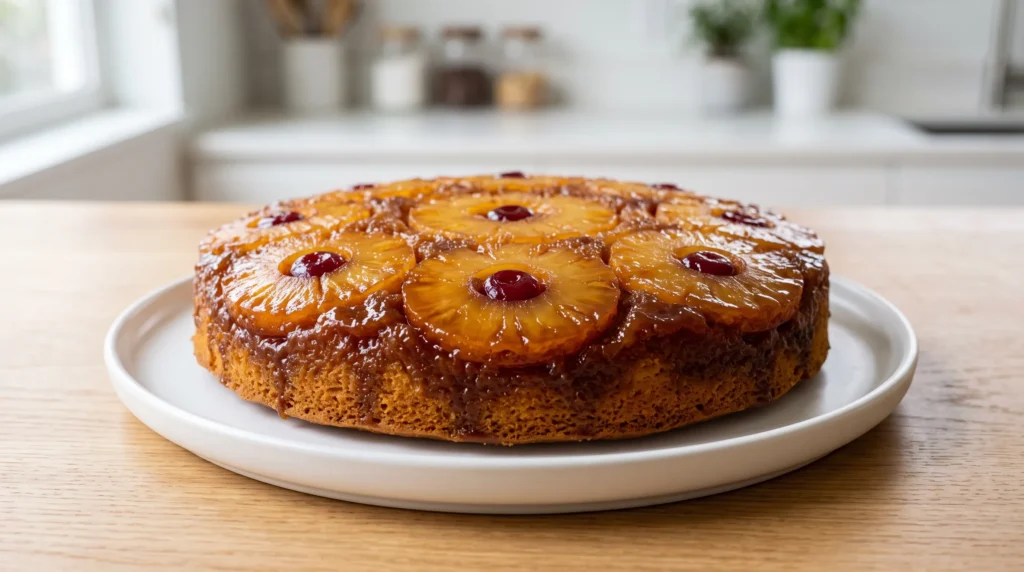
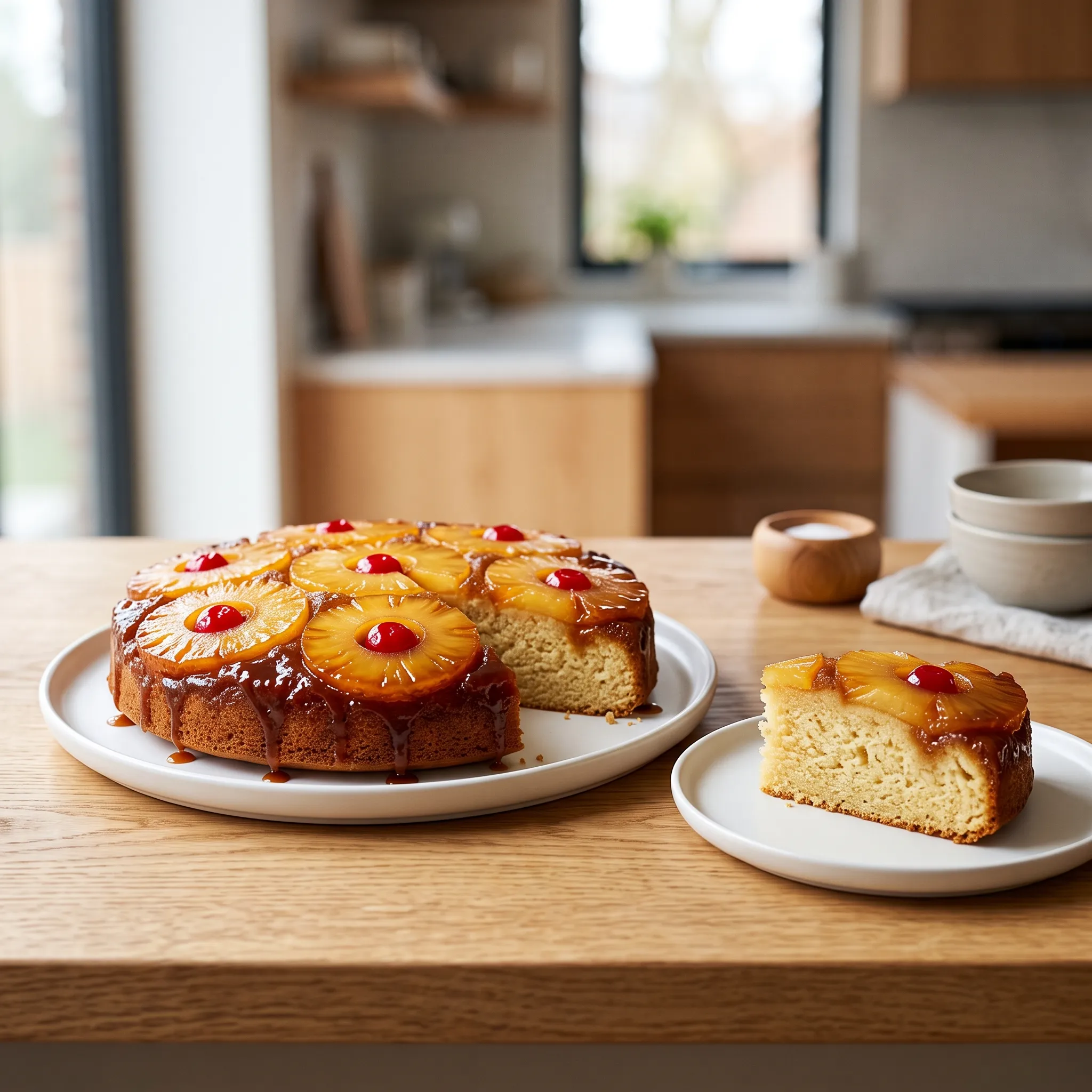
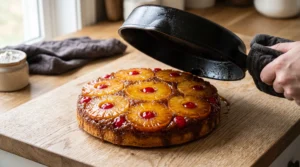
It is visually dramatic for something that requires almost no decorating skill. The presentation does itself: caramelized pineapple rings, glossy brown sugar topping, and maraschino cherries in every center, all revealed the moment you flip the pan. It also happens to taste exactly as good as it looks, which is not always a given with showpiece desserts.
The secret is in the caramelization that happens underneath the fruit while the cake bakes. Brown sugar and butter melt together directly on the bottom of the pan, coating the pineapple slices and creating a sticky, glossy, deeply sweet topping that sets during baking and releases cleanly when the pan is flipped. No frosting required. No decoration required. Just a warm, caramelized pineapple upside down cake coming out of a pan in one perfect, golden release.
This recipe makes it from scratch, with a buttery vanilla batter built specifically to complement the sweet-tart pineapple topping. No boxed mix. No shortcuts.
Before You Start: Tips That Make This Recipe Foolproof
Read these before you touch anything in the kitchen.
Use a cast iron skillet or a light-colored metal cake pan. Dark nonstick pans conduct heat too aggressively and can burn the brown sugar topping before the cake batter is fully baked. A 10-inch cast iron skillet gives you the most even caramelization and the most dramatic presentation.
Do not substitute fresh pineapple for canned in the topping. Fresh pineapple contains active bromelain, a proteolytic enzyme that breaks down proteins. When raw fresh pineapple sits on a cake batter, the bromelain can partially digest the gluten proteins before they set, resulting in a sunken, gummy layer beneath the fruit. Canned pineapple has been heat-processed, which permanently deactivates bromelain. Use canned.
Melt the butter in the pan before adding the brown sugar. This distributes it evenly and allows the brown sugar to dissolve into it without dry spots, producing a uniform caramel layer across the entire bottom.
Flip the cake while it is still warm, not hot and not cold. A cold cake means the caramel has set firmly and some of the topping may stick to the pan. The sweet spot is 5 to 10 minutes after the cake comes out of the oven.
Why You’ll Love This Pineapple Upside Down Cake
- No frosting, no decorating. The topping creates itself during baking and the presentation is revealed when you flip the pan.
- Genuinely caramelized pineapple. The brown sugar and butter meld around the pineapple slices during baking, producing a glossy, sticky topping with real depth of flavor.
- From-scratch buttery vanilla batter. No boxed mix. A butter-and-sour-cream combination gives you both flavor and lasting moisture.
- One pan. Mix the topping in the same pan you bake in, then pour the batter directly on top.
- Ready in about an hour. One of the faster baked cakes from scratch.
- Retro, nostalgic, and crowd-pleasing. This cake has been on American tables for a century for very good reason.
A Brief History Worth Knowing
Pineapple upside down cake did not begin as a home recipe. Pineapple upside down cake did not begin as a home recipe. Its origin traces to a 1925 recipe contest sponsored by the Dole Pineapple Company, which had recently introduced canned sliced pineapple to American consumers and needed to demonstrate how versatile the product could be. The contest received thousands of entries, many featuring pineapple arranged on the bottom of a skillet with brown sugar and butter, then baked under a sponge batter and inverted to serve.
The concept was not entirely new. Upside down skillet cakes had been made with apples and other fruits for decades. But the combination of the Dole contest, the visual drama of caramelized rings, and the rising popularity of home electric ovens in 1920s American kitchens turned pineapple upside down cake into one of the most replicated recipes of the twentieth century.
It remains one of the most searched cake recipes in the United States nearly a hundred years later.
What You Need
For the Pineapple Topping
- 4 tablespoons unsalted butter
- 3/4 cup light brown sugar, packed
- 1 can (20 oz) sliced pineapple in juice, drained (reserve the juice)
- 10 to 12 maraschino cherries
For the Vanilla Cake Batter
- 1 1/2 cups all-purpose flour
- 1 teaspoon baking powder
- 1/4 teaspoon baking soda
- 1/4 teaspoon salt
- 1/2 cup unsalted butter, room temperature
- 3/4 cup granulated sugar
- 2 large eggs, room temperature
- 1 teaspoon vanilla extract
- 1/3 cup sour cream, room temperature
- 1/3 cup reserved pineapple juice
Recommended Equipment
| Amount | Name | Notes |
|---|---|---|
| 1 | 10-inch cast iron skillet or 9-inch round metal pan | Light-colored metal or cast iron only |
| 1 | KitchenAid stand mixer or hand mixer | For the batter |
| 1 | Digital kitchen scale | For accurate flour measurement |
| 1 | Cake tester or toothpick | For doneness check |
| 1 | Wire rack | For cooling after flipping |
| 1 | Large heatproof serving plate | Must be larger than the pan |
Step-by-Step Instructions
Step 1: Make the Caramel Topping
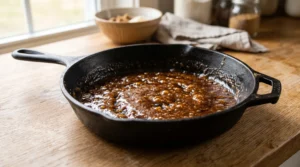
Preheat oven to 350 degrees F. Melt 4 tablespoons butter directly in the cast iron skillet or cake pan over medium heat on the stovetop, or in the oven for 3 to 4 minutes. Remove from heat. Sprinkle the brown sugar evenly over the melted butter and stir briefly until it forms a rough paste across the bottom of the pan.
Step 2: Arrange the Fruit
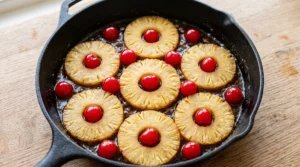
Dry the drained pineapple slices with a paper towel to remove excess juice. Arrange over the brown sugar layer: one whole ring in the center, remaining rings around it, cutting slices in half to fill the outer edge. Press the pineapple firmly into the brown sugar. Place a maraschino cherry in the center of each ring and in any gaps between slices.
Step 3: Mix Dry Ingredients
Whisk together the flour, baking powder, baking soda, and salt. Set aside.
Step 4: Make the Batter
Beat the room temperature butter and granulated sugar in a stand mixer on medium-high for 3 minutes until pale and fluffy. Add the eggs one at a time, scraping the bowl between each. Add vanilla. Mix in sour cream on low until just combined.
Step 5: Alternate Dry and Wet
Add the flour mixture in two additions, alternating with the reserved pineapple juice. Begin and end with the flour. Mix on low and stop the moment each addition is incorporated. Do not overmix.
Step 6: Bake
Pour the batter gently over the arranged pineapple and cherry layer, starting from the center and spreading carefully to the edges without disturbing the fruit. Bake for 38 to 45 minutes until a cake tester inserted in the center comes out clean and the edges are golden and pulling away from the sides of the pan. Maillard browning on the surface edges signals that the sugars have caramelized properly in the batter.
Step 7: Flip
Let the cake rest in the pan for exactly 5 to 10 minutes. Place a large heatproof serving plate firmly over the top of the pan. In one confident motion, flip the pan and plate together. Hold for 5 seconds, then lift the pan away slowly. If any fruit sticks to the pan, press it back into place on the cake.
Step 8: Garnish and Serve
Spoon any caramel that drips onto the plate back over the top of the pineapple upside down cake. Dust lightly with powdered sugar if desired. Serve warm or at room temperature with vanilla ice cream or lightly whipped cream.
The Science: Why Caramelization Works and Why Fresh Pineapple Fails
Two things happen during baking that are worth understanding.
The first is caramelization. Brown sugar contains molasses, which begins to melt and caramelize at lower temperatures than white granulated sugar. When butter and brown sugar melt together on the bottom of the hot pan, they form a preliminary caramel even before the oven heat reaches them. As baking progresses, the temperature beneath the topping exceeds the caramelization threshold of roughly 320 degrees F, deepening the color and flavor and creating the glossy, sticky surface that defines this cake. The pineapple juice that releases from the rings during baking dissolves into this caramel layer and contributes a bright, tropical acidity that balances the richness of the butter and brown sugar.
The second is bromelain inactivation. Fresh pineapple contains bromelain, an active proteolytic enzyme that degrades proteins. According to Britannica’s entry on bromelain this enzyme is used commercially as a meat tenderizer because of its effectiveness at breaking down protein structures. In a cake batter, active bromelain can digest the gluten proteins before they fully set during baking, resulting in a structurally compromised layer of batter directly beneath the raw fruit. Canned pineapple is safe to use because the heat applied during commercial canning permanently denatures the bromelain, rendering it inactive.
This is why traditional pineapple upside down cake recipes specifically call for canned pineapple. It is not just a convenience recommendation. It is a structural requirement, and King Arthur Baking’s guidance on fruit in baking confirms that enzyme activity in fresh tropical fruits is a legitimate concern when baking with them in batters.
The Best Pineapple Upside Down Cake (Caramelized, From Scratch)
Ingredients
Equipment
Method
- Preheat oven to 350 degrees F.
- Melt 4 tablespoons butter in a 10-inch cast iron skillet or 9-inch round cake pan over medium heat. Remove from heat. Sprinkle brown sugar evenly over the butter and stir into a rough paste.
- Pat drained pineapple slices dry. Arrange over brown sugar: one ring in center, remaining rings around it. Press firmly. Place a maraschino cherry in each ring center and in gaps between slices.
- Whisk flour, baking powder, baking soda, and salt in a bowl. Set aside.
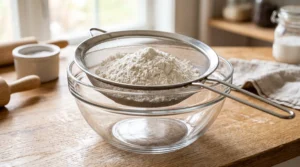
- Beat butter and granulated sugar on medium-high for 3 minutes until pale and fluffy. Add eggs one at a time, scraping bowl between each. Add vanilla. Mix in sour cream on low.
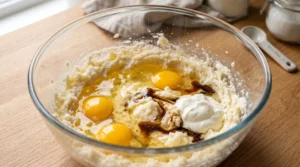
- Add flour mixture in two additions, alternating with pineapple juice. Mix on low. Stop as soon as incorporated.
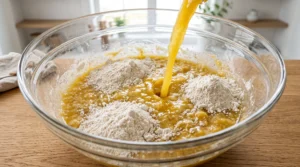
- Pour batter gently over the fruit from the center outward. Spread carefully without disturbing the fruit.
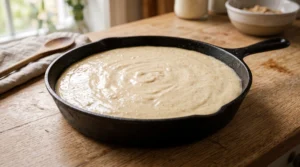
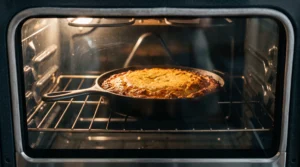
- Bake 38 to 45 minutes until cake tester comes out clean and edges are golden.
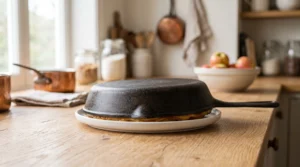
- Rest in pan 5 to 10 minutes. Place large heatproof plate firmly over pan. Flip in one confident motion. Hold 5 seconds. Lift pan away slowly. Spoon any dripped caramel back over the cake.
- Serve warm or at room temperature. Dust with powdered sugar if desired.
Notes
- Do not use dark nonstick pans. They cause the brown sugar to burn.
- Do not use uncooked fresh pineapple. Active bromelain enzyme can prevent the batter from setting.
- Dry pineapple slices before arranging. Excess juice makes the caramel too thin.
- Flip within 5 to 10 minutes of removing from oven. Too late and the caramel sticks.
- Best served warm on day of baking. Reheat at 300 degrees F for 8 to 10 minutes if made ahead.
Frequently Asked Questions
Can I use fresh pineapple instead of canned?
Yes, with preparation. Fresh pineapple contains active bromelain enzyme which can break down gluten proteins in the batter beneath it. To use fresh pineapple safely, slice it thinly and cook the slices in a saucepan with a little sugar and water for 3 to 4 minutes to deactivate the bromelain before arranging them in the pan.
Why did my pineapple upside down cake stick to the pan?
Usually because the cake was flipped too late. As the caramel cools, it hardens and sticks to the pan surface more firmly. Flip within 5 to 10 minutes of removing from the oven. If sticking occurs, run a thin knife around the edge of the pan before flipping.
Can I make this in a cast iron skillet?
Yes, and many bakers consider it the best format. Cast iron distributes heat evenly, producing more uniform caramelization across the entire bottom. It holds heat well, keeping the caramel soft and pliable longer after baking and making the flip easier.
Can I make pineapple upside down cake ahead?
This cake is best on the day it is baked. The caramelized topping is most glossy and the cake most moist when fresh. If making ahead, bake and flip it, then let it cool. Store at room temperature covered loosely. Rewarm at 300 degrees F for 10 minutes before serving.
What can I use instead of maraschino cherries?
Fresh or canned dark cherries work well and look elegant. Dried cranberries add a tart note. The cake is also visually complete without any cherries if preferred.
Can I use a bundt pan?
A bundt pan is not ideal because the topping needs a flat surface. A 9-inch round metal pan is the most reliable alternative to cast iron for this recipe.
Tips That Make a Difference
- Dry the pineapple slices with a paper towel after draining. Excess juice makes the caramel too thin.
- Press the pineapple and cherries firmly into the brown sugar layer before pouring the batter.
- Pour the batter slowly from the center outward to avoid displacing the fruit arrangement.
- Save any caramel that drips onto the serving plate and spoon it back over the cake.
- The sour cream in the pineapple upside down cake batter adds fat and acid that tenderizes the crumb and helps the cake stay moist for days.
Variations
Cast Iron Skillet Pineapple Upside Down Cake
Use a 10-inch seasoned cast iron skillet. The skillet goes directly from stovetop to oven and produces the most even caramelization of any pan type.
Rum Caramel Version
Add 2 tablespoons of dark rum to the butter and brown sugar mixture. The rum enhances the caramel depth and adds tropical warmth that complements the pineapple.
Brown Butter Version
Brown the butter in the pan before adding the brown sugar. The nutty, caramel notes of browned butter take the topping to a significantly more complex level.
Mini Pineapple Upside Down Cakes
Divide the topping and batter among a well-greased 12-cup muffin tin. Use pineapple tidbits in each cup. Bake at 350 degrees F for 18 to 22 minutes. Perfect for parties.
Gluten-Free Version
Substitute an equal weight of Bob’s Red Mill 1:1 or King Arthur Measure for Measure for the all-purpose flour. The topping is naturally gluten-free, and the pineapple juice adds moisture that compensates for gluten-free flour substitutions.
Serving Ideas
Pineapple upside down cake is best served warm. A slice fresh from the pan, with the caramel still soft and glossy, paired with a scoop of vanilla ice cream is the version most people remember as the best they have ever had.
For a more formal presentation, serve at room temperature with lightly sweetened whipped cream. For a summer cookout or potluck, this cake travels and holds better than most frosted layer cakes and serves directly from a platter with no additional preparation.
How to Store Pineapple Upside Down Cake
Room temperature: Pineapple upside down cake keeps covered loosely for up to 2 days. The caramel topping may become slightly sticky but flavor is unaffected.
Refrigerator: Covered tightly for up to 4 days. Remove 30 minutes before serving or rewarm at 300 degrees F for 8 to 10 minutes to restore the gloss.
Freezer: Wrapped tightly for up to 1 month. Thaw overnight at room temperature. The caramel may appear slightly less glossy but flavor remains very close to fresh.