The Best Chocolate Olive Oil Cake Recipe (Moist, Dairy-Free, No Mixer)
Bold claim: this is the moistest chocolate cake you will ever make without butter.
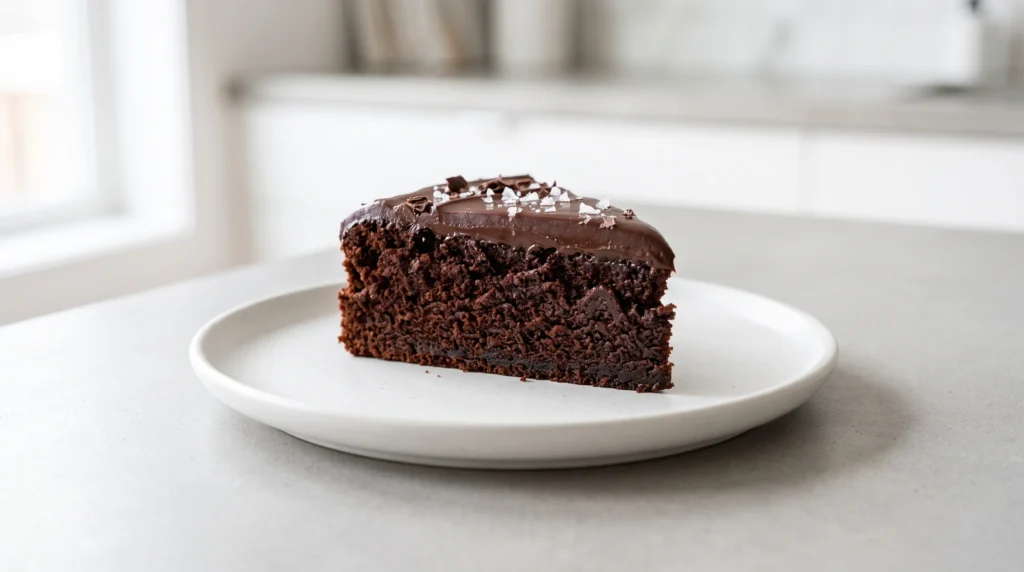
That is not a small thing to say. Butter-based chocolate cakes have a loyal following for good reason: they taste rich, they have structure, and generations of home bakers have grown up making them. But butter has one weakness that olive oil does not. Butter solidifies at room temperature. Olive oil does not. Which means this chocolate olive oil cake stays genuinely, almost aggressively moist at room temperature, the day after baking, and two days after that. No dome of plastic wrap required. No reheating to restore softness. Just a dense, tender, deeply chocolatey crumb that holds its texture considerably longer than any butter cake I have ever made.
The olive oil is not a neutral substitution in this chocolate olive oil cake. It is an ingredient with a flavor, a mild fruitiness and a faint peppery finish that plays extraordinarily well with dark chocolate in a way that butter never quite achieves. If you have eaten a brownie made with good olive oil and wondered why it tasted more interesting than the standard version, this is the same effect scaled up to a whole cake.
No mixer needed. No creaming. No special equipment beyond a bowl, a whisk, and a 9-inch cake pan.
Why This Chocolate Olive Oil Cake Works Better Than the Butter Version
- Stays moist for days. Oil is liquid at room temperature. Butter is not. This fundamental difference means an oil-based cake crumb stays soft for two to three days longer than an equivalent butter cake.
- No mixer needed. The batter comes together in one bowl with a whisk. No creaming, no stand mixer, no complicated technique.
- Naturally dairy-free. No butter, no milk, no buttermilk. The batter uses eggs, olive oil, and coffee as its primary liquids, making it naturally suitable for dairy-free diets.
- Deep chocolate flavor. Hot coffee blooms the Dutch-process cocoa and melted dark chocolate simultaneously, producing an intensity of chocolate flavor that most scratch cakes never reach.
- The olive oil adds complexity. A good extra virgin olive oil brings a faint fruitiness and gentle peppery note that makes the chocolate taste more interesting. This is not a flavor that competes. It is one that supports.
- Elegant enough for dinner parties, simple enough for Tuesday. Served plain with a dusting of cocoa powder or dressed up with ganache and raspberries, this cake adapts to any occasion.
The Best Chocolate Olive Oil Cake (Moist, Dairy-Free, No Mixer)
Ingredients
Equipment
Method
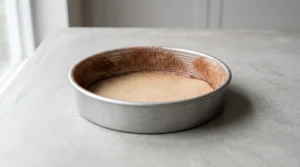
- Preheat oven to 325 degrees F. Grease a 9-inch round cake pan and line with parchment. If using cocoa sugar crust, mix sugar and cocoa and dust evenly over greased pan. Tap out excess.
- Place chopped dark chocolate in a large bowl. Pour hot coffee over chocolate and rest 1 minute. Whisk until fully melted and smooth.
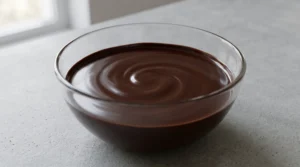
- Add sifted cocoa powder and whisk until incorporated.
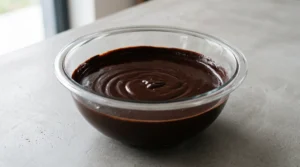
- Add olive oil, eggs, vanilla, and warm water. Whisk until smooth and emulsified.
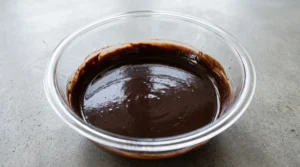
- Add flour, sugar, baking soda, and salt. Whisk until just combined. Batter will be thin. This is correct.
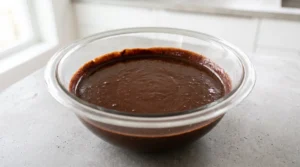
- Pour batter into prepared pan. Bake 35 to 40 minutes until cake tester comes out clean or with a few moist crumbs.
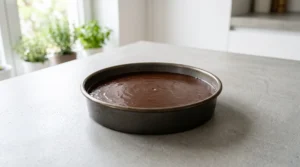
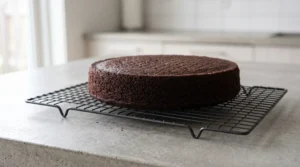
- Cool in pan on wire rack for 20 minutes. Invert onto wire rack and cool completely.
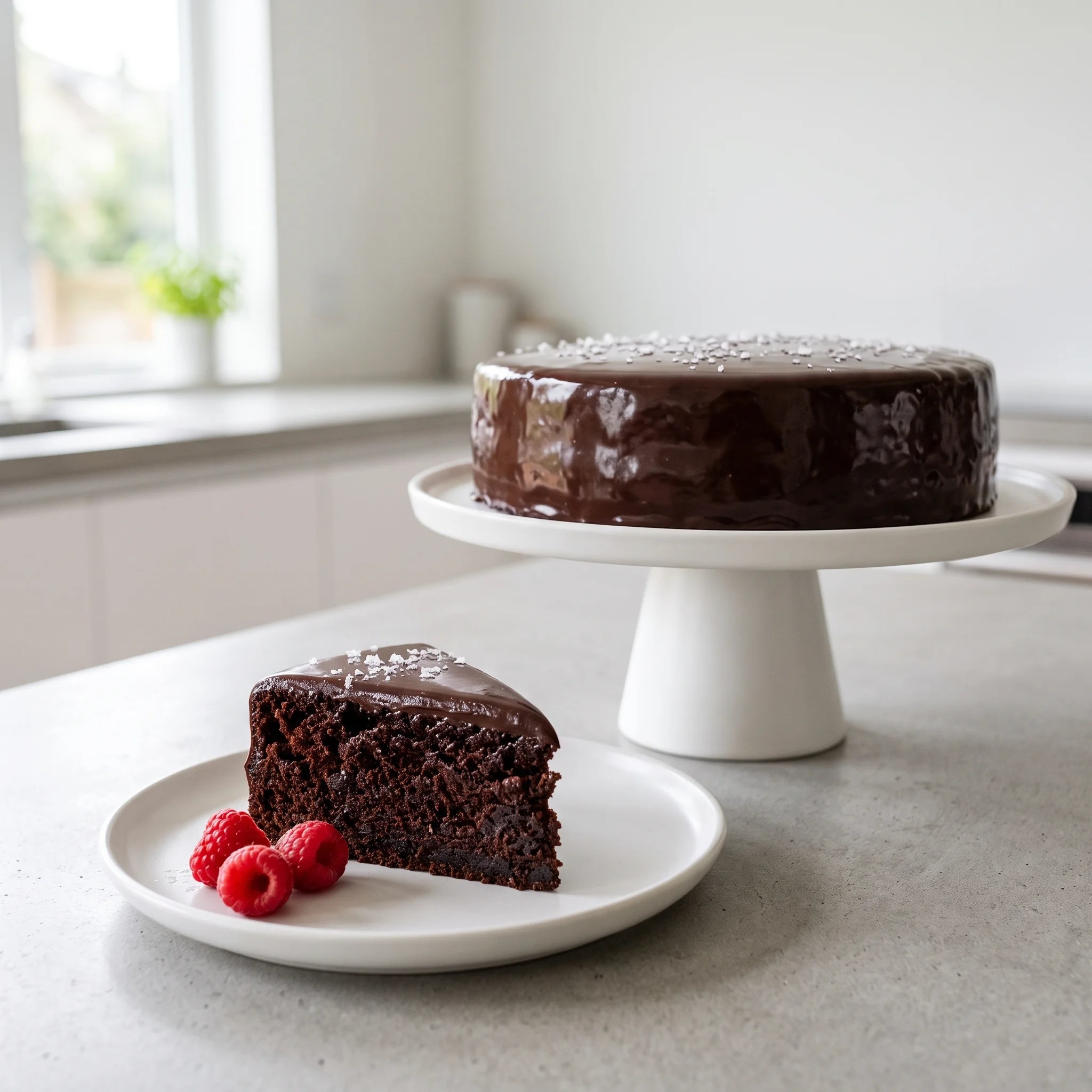
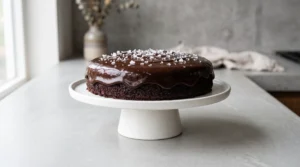
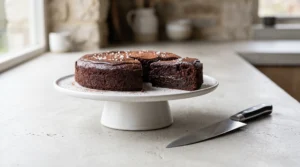
- Dust with sifted cocoa powder, or pour ganache over the cooled cake and finish with flaky sea salt.
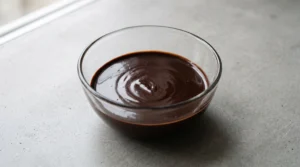
- For ganache: combine chopped chocolate, olive oil, and honey in a heatproof bowl. Microwave in 30-second intervals, stirring between each, until smooth. Cool slightly until pourable.
- Serve at room temperature. Pairs beautifully with vanilla ice cream, Greek yogurt, or fresh raspberries.
Notes
- Use Dutch-process cocoa only. Natural cocoa produces a different flavor and color.
- Do not skip the hot coffee bloom step. It is the primary source of deep chocolate flavor.
- A mild or medium extra virgin olive oil gives the best balance of flavor. Very robust olive oils can overpower the chocolate.
- The batter will look very thin and loose before baking. This is normal and correct.
- This cake is best stored at room temperature, not refrigerated. It keeps moist for up to 4 days.
- For the ganache, let it cool until slightly thickened before pouring for best coverage.
Frequently Asked Questions
Does this chocolate olive oil cake taste like olive oil?
This is the question everyone asks first. The answer depends on the olive oil. A mild extra virgin olive oil or light olive oil contributes a subtle fruitiness that blends almost invisibly into the chocolate. A robust, peppery extra virgin olive oil (the kind with a strong green color and an assertive finish) will contribute more noticeable olive flavor. Both are good, but they produce different results. For a first attempt, a mild or medium extra virgin olive oil is the better starting point.
What is the difference between extra virgin and light olive oil in baking?
Extra virgin olive oil is cold-pressed from fresh olives and retains all of its natural flavor compounds. Light olive oil is refined to remove most of the flavor and aroma, resulting in a more neutral oil that behaves similarly to vegetable oil. In a chocolate olive oil cake, extra virgin olive oil adds flavor complexity. Light olive oil produces a more neutral result. Neither is wrong. Extra virgin is more interesting.
Can I use regular cocoa powder instead of Dutch-process?
You can, but the results will be different. Dutch-process cocoa has been alkalinized to neutralize its natural acidity, producing a darker color, a smoother flavor, and a less bitter taste. Natural cocoa is more acidic and produces a lighter, sharper-tasting chocolate flavor. For this recipe, Dutch-process cocoa is recommended because the hot coffee blooming technique works best with its alkaline profile.
Is this chocolate olive oil cake truly dairy-free?
As written, yes. The batter contains no butter, no milk, and no cream. The only animal products are eggs. For a fully vegan version, see the variations section.
Why does this recipe use hot coffee?
Hot coffee does two things simultaneously. It blooms the cocoa powder, breaking down the fat-bound flavor compounds and releasing the full intensity of the chocolate aroma. It also melts the chopped dark chocolate, allowing it to emulsify smoothly into the batter rather than leaving pieces of unmelted chocolate. The batter will not taste like coffee. It will taste like the most intensely chocolatey cake you have made.
Can I make this without coffee?
Yes. Replace the hot coffee with an equal amount of boiling water. The cake will still be good, but the chocolate flavor will be noticeably less deep. Even adding a quarter teaspoon of instant espresso powder to the boiling water helps significantly.
What You Need
For the Chocolate Olive Oil Cake
- 1 1/2 cups all-purpose flour
- 1 cup granulated sugar
- 1/2 cup Dutch-process cocoa powder, sifted
- 1 1/2 teaspoons baking soda
- 1/2 teaspoon salt
- 3 large eggs, room temperature
- 3/4 cup extra virgin olive oil (mild or medium intensity)
- 1 teaspoon vanilla extract
- 1/2 cup strong hot coffee or boiling water
- 2 oz (56g) dark chocolate (70% cocoa), finely chopped
- 1/3 cup warm water
For the Optional Cocoa Sugar Crust
- 2 tablespoons granulated sugar
- 1 tablespoon Dutch-process cocoa powder
For Simple Dark Chocolate Ganache (Optional)
- 4 oz (113g) dark chocolate (70%), finely chopped
- 1/2 cup extra virgin olive oil (mild)
- 1 tablespoon honey or maple syrup
- Flaky sea salt, for finishing
Recommended Equipment
| Amount | Name | Notes |
|---|---|---|
| 1 | 9-inch round cake pan | Springform works well for easy removal |
| 1 | Large mixing bowl | For one-bowl batter |
| 1 | Whisk | No mixer needed |
| 1 | Digital kitchen scale | Recommended for chocolate measurement |
| 1 | Cake tester or toothpick | For doneness check |
| 1 | Wire rack | For cooling |
| 1 | Fine-mesh sieve | For sifting cocoa and dusting |
Step-by-Step Instructions
Step 1: Prep
Preheat oven to 325 degrees F. Grease a 9-inch round cake pan and line the bottom with parchment paper. If making the cocoa sugar crust, mix the sugar and cocoa together and dust it evenly over the greased pan, tapping out any excess. This creates a crackling, slightly bitter crust on the outside of the finished cake that contrasts beautifully with the moist interior.
Step 2: Bloom the Chocolate and Cocoa
Place the finely chopped dark chocolate in a large mixing bowl. Pour the hot coffee or boiling water over the chocolate and let it sit for 1 minute. Whisk until the chocolate is completely melted and smooth. Add the sifted Dutch-process cocoa powder and whisk until fully incorporated. The mixture will be thick, dark, and glossy.
Step 3: Add Wet Ingredients
Add the extra virgin olive oil, eggs, vanilla extract, and warm water to the chocolate mixture. Whisk until the batter is completely smooth and emulsified.
Step 4: Add Dry Ingredients
Add the flour, sugar, baking soda, and salt directly to the wet mixture. Whisk until just combined and no dry streaks remain. The batter will be thin and pourable. This is correct.
Step 5: Bake
Pour the batter into the prepared pan. Bake at 325 degrees F for 35 to 40 minutes until a cake tester inserted in the center comes out clean or with a few moist crumbs. The top will look set and the edges will begin pulling away from the sides of the pan. Do not overbake. The Maillard browning on the surface indicates the sugars have caramelized correctly.
Step 6: Cool
Cool in the pan on a wire rack for 20 minutes. Run a thin knife around the edge of the pan, then invert onto the wire rack to cool completely. If you used the cocoa sugar crust technique, this crackling surface will be on the outside of the finished cake.
Step 7: Finish and Serve
Dust with sifted cocoa powder for a simple, elegant finish. Or pour the optional chocolate ganache over the cooled cake. To make the ganache: combine the chopped dark chocolate, olive oil, and honey in a heatproof bowl. Microwave in 30-second intervals, stirring between each, until smooth. Let cool slightly until it has the consistency of thick cream, then pour over the cake. Finish with flaky sea salt.
The Science: Why Olive Oil Makes a Fundamentally Better Chocolate Cake
Most home bakers choose between butter and vegetable oil without thinking much about what each is doing structurally. In a chocolate cake, the difference is significant.
Butter is approximately 80% fat and 20% water. It solidifies at cold temperatures (below about 68 degrees F) and becomes firm but soft at room temperature. In a butter-based cake crumb, the solid fat particles create a structure that firms up noticeably when the cake cools and even more when it is refrigerated. This is why a slice of butter chocolate cake from the refrigerator often feels denser and drier than it did fresh from the oven.
Extra virgin olive oil, by contrast, is nearly 100% fat with no water content, and it remains liquid at room temperature. In a chocolate olive oil cake batter, the oil molecules are distributed throughout the protein and starch matrix but do not solidify as the cake cools. The result is a crumb that stays perceptibly softer and moister at room temperature and in the refrigerator than an equivalent butter cake. According to King Arthur Baking’s research on fat in baking oil-based cakes consistently outperform butter cakes in moisture retention over time, which is the primary reason professional bakers often use oil as the base fat in high-volume commercial chocolate cakes.
Extra virgin olive oil also contributes polyphenols, bioactive compounds responsible for the characteristic flavor and aroma of fresh-pressed olive oil. According to the International Olive Council’s overview of olive oil composition these polyphenols include oleocanthal and oleacein, which have known antioxidant properties and which also give quality extra virgin olive oil its distinctive peppery finish. In combination with the flavonoids in dark chocolate (specifically epicatechin and EGCG), this cake delivers two complementary categories of dietary antioxidants in one dessert. That is not the main reason to make it, but it is a genuinely nice secondary benefit.
The hot coffee step is not optional flavor addition. It is a structural technique. Heat breaks the fat-protein bonds in cocoa powder particles and releases the aromatic volatile compounds that give cocoa its chocolate character. This process, called blooming, significantly intensifies the perceived chocolate flavor without adding more cocoa powder. It also melts the chopped dark chocolate directly into the batter without a separate double boiler step, creating a smoother, more emulsified batter that bakes more evenly.
Variations
Dairy-Free Ganache Version
For a fully dairy-free finish, use the olive oil ganache in the main recipe (dark chocolate, extra virgin olive oil, maple syrup) rather than a cream-based ganache. This ganache sets to a glossy, pourable finish with a slightly less rich texture than cream-based ganache but a more pronounced chocolate and olive oil flavor.
Vegan Chocolate Olive Oil Cake
Replace the 3 eggs with 3 flax eggs (3 tablespoons ground flaxseed mixed with 9 tablespoons water, rested 10 minutes). The crumb will be slightly denser and the chocolate olive oil cake will take a few extra minutes to set in the oven. The chocolate and olive oil flavors come through just as clearly.
Orange Chocolate Olive Oil Cake
Add 1 tablespoon of fresh orange zest and 2 tablespoons of fresh orange juice to the wet ingredients. Orange and dark chocolate is one of the most classically Italian flavor pairings, and the addition amplifies rather than masks the olive oil note in the cake.
Espresso Chocolate Olive Oil Cake
Use double-strength espresso in place of the regular coffee and add 1 teaspoon of instant espresso powder to the dry ingredients. This version has an almost mocha-like depth that makes it feel like a serious dinner party dessert.
Almond Flour Chocolate Olive Oil Cake (Gluten-Free and Italian-Style)
Replace the all-purpose flour with 1 1/2 cups of finely ground almond flour. Reduce the baking soda to 1 teaspoon. The resulting cake is denser, fudgier, and more reminiscent of the flourless chocolate tortes popular in Italian baking. It is also naturally gluten-free and has a slightly shorter baking time (check at 28 minutes).
Serving Ideas
This chocolate olive oil cake needs almost nothing to make it worth serving. A dusting of good Dutch-process cocoa powder is the simplest and most elegant presentation. For dinner parties, the olive oil ganache poured over the top and finished with flaky sea salt looks and tastes significantly more sophisticated than the effort involved would suggest.
Fresh raspberries or halved figs arranged alongside a slice add color and a tartness that cuts through the richness of the cake cleanly. A small scoop of vanilla ice cream or a spoonful of thick, unsweetened Greek yogurt alongside a warm slice creates a temperature contrast that makes the soft, dense crumb feel almost pudding-like.
This cake pairs naturally with red wine, particularly a light Italian red like Chianti or Barbera, which continues the Mediterranean theme and complements the olive oil and dark chocolate flavors. It also works beautifully with strong espresso, which echoes the coffee used in the batter.
How to Store Chocolate Olive Oil Cake
Room temperature: This is where this chocolate olive oil cake genuinely outperforms butter-based chocolate cakes. Covered loosely at room temperature, it keeps moist and fresh for up to 4 days. Do not refrigerate if you can avoid it. The olive oil crumb is at its best at room temperature.
Refrigerator: If needed, covered tightly for up to 6 days. Remove 30 to 45 minutes before serving. The cold does not ruin this cake the way it can ruin a butter cake, but room temperature is still the ideal serving condition.
Freezer: Wrapped tightly in plastic wrap and foil, freeze for up to 2 months. Thaw overnight at room temperature. The crumb remains remarkably intact after freezing and thawing.
A Personal Note
I made this chocolate olive oil cake for the first time because I ran out of butter halfway through a chocolate cake recipe and decided to see what would happen if I finished it with the olive oil sitting on the counter. What happened was a slightly greasy, underbaked experiment that I ate anyway and then spent two weeks thinking about because something about the flavor combination was genuinely compelling even when the execution was wrong.
The recipe took several more attempts to get right. The ratio of cocoa to flour mattered. The blooming technique made a visible difference. The coffee was not optional. But the thing I kept coming back to was the olive oil. Butter chocolate cake is familiar and reliable and good. This is different in a way that is harder to describe than it is to taste.
Make it once and you will understand what I mean.