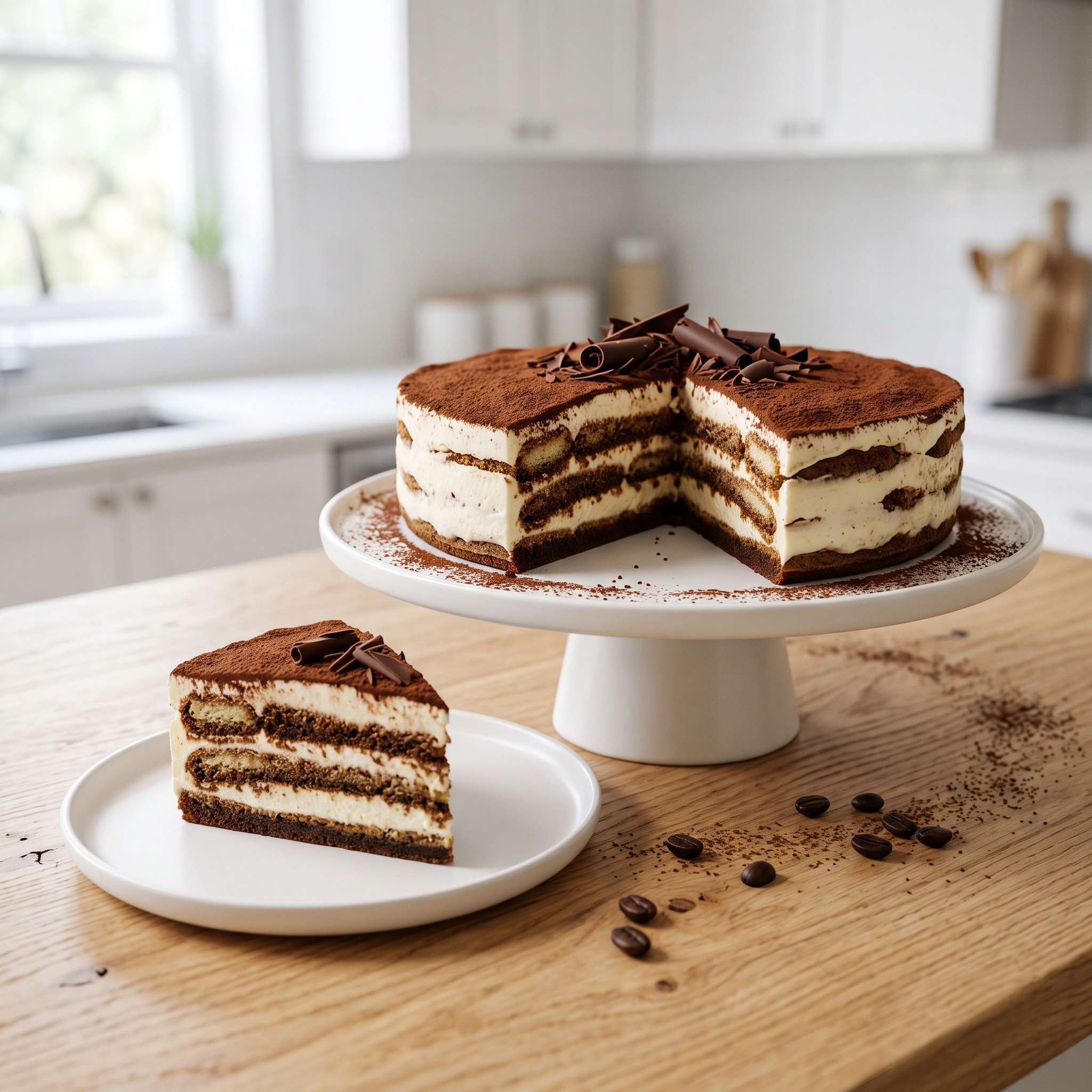
The Best Tiramisu Cake Recipe (No-Bake, Authentic Italian Style)
If you have only ever had tiramisu cake from an American bakery, the loaded, layer-cake version with frosting and sponge, this recipe is going to surprise you. This is the real thing: a no-bake tiramisu built in a springform pan, layered with espresso-soaked ladyfingers and a rich mascarpone cream, finished with nothing but a heavy dusting of cocoa powder. No oven, no flour, no leavening agents. Just the dessert Italians have been making in home kitchens for generations, shaped into a cake you can slice and serve.
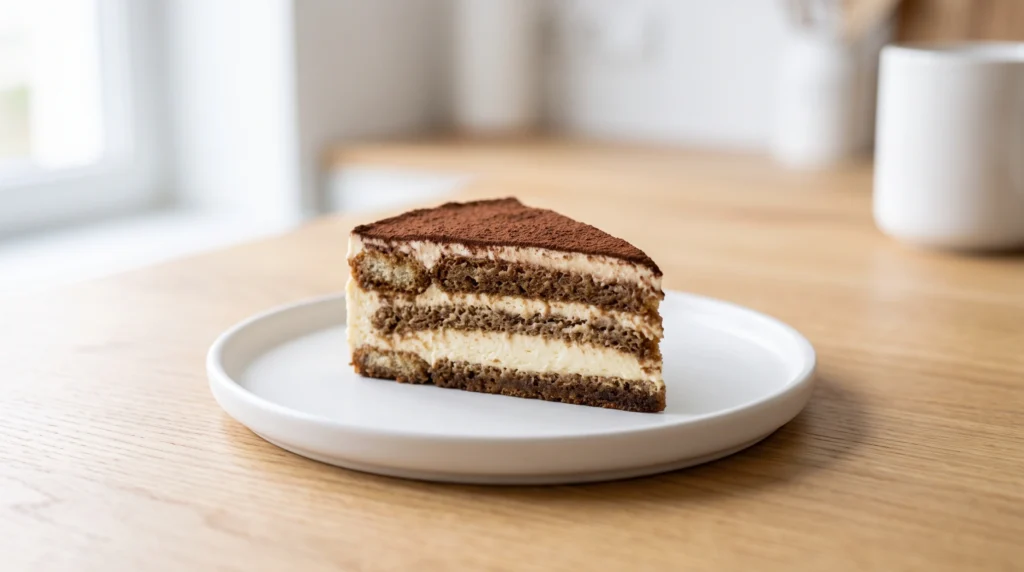
Why This Tiramisu Cake Works Every Single Time
These are the details that separate a tiramisu cake that slices clean from one that collapses into a puddle on the plate.
Room temperature mascarpone is non-negotiable. Cold mascarpone straight from the refrigerator will not whip smoothly and is far more prone to curdling when combined with other ingredients. Let it sit out for 30 to 45 minutes before you start.
Dip the ladyfingers quickly, not slowly. A one to two second dip per side is enough. Savoiardi ladyfingers are designed to absorb liquid fast. Leave them in the coffee any longer and they turn to mush before they even make it into the pan, which is the single most common reason tiramisu turns soggy.
Use room temperature eggs for the cream. Cold eggs whip less efficiently and can cause the sugar to seize slightly when combined, leaving a grainy texture in the finished cream.
This cake needs real chill time. A minimum of 6 hours, but overnight is dramatically better. The structure firms up, the flavors meld, and slicing becomes clean rather than messy. This is genuinely one of the most forgiving make-ahead desserts that exists.
What You Need
For the Espresso Soak
- 1 1/2 cups strong brewed espresso or strong coffee, cooled to room temperature
- 2 tablespoons dark rum or Marsala wine (optional, see Variations for alcohol-free)
For the Mascarpone Cream
- 6 large egg yolks, room temperature
- 3/4 cup granulated sugar, divided
- 1/4 cup water
- 16 oz mascarpone cheese, room temperature
- 1 1/2 cups heavy whipping cream, cold
- 1 teaspoon vanilla extract
For Assembly
- 2 packages (about 7 oz each) Savoiardi ladyfingers
- 1/3 cup unsweetened cocoa powder, for dusting
- Dark chocolate shavings, for garnish (optional)
Recommended Equipment
- A 9-inch springform pan
- A KitchenAid stand mixer or hand mixer
- A double boiler or heatproof bowl set over simmering water
- A digital kitchen scale for accurate measurements
- A fine-mesh sieve for dusting cocoa powder evenly
- A candy or instant-read thermometer for the egg yolk mixture
Step-by-Step Instructions
Step 1: Make the Espresso Soak
Brew the espresso or strong coffee and let it cool to room temperature. Stir in the rum or Marsala if using. Pour into a shallow dish wide enough to dip the ladyfingers.
Step 2: Make the Egg Yolk Base
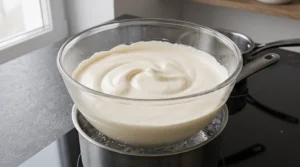
In a heatproof bowl set over a pot of simmering water (not touching the water), whisk the egg yolks, half the sugar (6 tablespoons), and the water together continuously. Whisk for 8 to 10 minutes until the mixture is pale, thick, and has roughly doubled in volume, reaching about 160 degrees F if using a thermometer. This step cooks the eggs safely while creating the traditional zabaglione base. Remove from heat and let cool to room temperature, whisking occasionally.
Step 3: Combine with Mascarpone
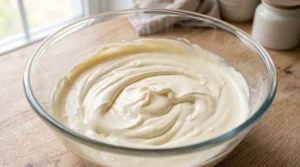
In a separate bowl, beat the room temperature mascarpone briefly with a spatula or mixer on low speed just until smooth. Fold the cooled egg yolk mixture into the mascarpone gently until fully combined. Do not overmix; mascarpone breaks down and turns grainy if beaten too aggressively.
Step 4: Whip the Cream
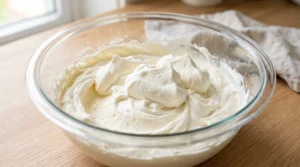
In a clean bowl, whip the cold heavy cream with the remaining sugar (6 tablespoons) and vanilla extract until soft to medium peaks form. Gently fold the whipped cream into the mascarpone mixture in two or three additions, folding just until no streaks remain.
Step 5: Assemble
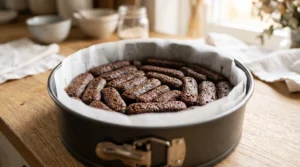
Line the bottom of a 9-inch springform pan with parchment paper. Quickly dip each ladyfinger into the espresso soak, one to two seconds per side, and arrange in a single layer on the bottom of the pan, trimming pieces to fill any gaps. Spread half of the mascarpone cream evenly over the ladyfingers. Repeat with a second layer of dipped ladyfingers and the remaining cream.
Step 6: Chill
Cover and refrigerate for at least 6 hours, ideally overnight. The cake needs this time to set into sliceable layers.
Step 7: Finish and Serve
Just before serving, run a thin knife around the edge of the springform pan and release the sides. Dust generously with cocoa powder using a fine-mesh sieve for even coverage. Add chocolate shavings if desired. Slice with a sharp knife, wiping the blade clean between cuts.
The 4 Most Common Tiramisu Cake Failures (And How This Recipe Avoids Them)
A runny, soup-like filling. Almost always caused by undercooking the egg yolk mixture (it needs to actually thicken over the simmering water) or by folding rather than properly whipping the cream before incorporating it. Both steps in this recipe are designed specifically to avoid this.
Soggy, disintegrated ladyfingers. Caused by dipping too slowly. Savoiardi are dry, porous biscuits engineered to absorb liquid almost instantly. A quick one to two second dip is genuinely all that is needed. Longer than that and the structural integrity of the biscuit is already compromised before it even reaches the pan.
What if my mascarpone cream turns grainy?
This happens when mascarpone is overmixed or combined with ingredients at very different temperatures, both of which cause the fat and protein structure to break down and separate slightly. Always bring mascarpone to room temperature first, fold gently rather than beating, and never add it directly to a hot mixture. If graininess happens anyway, there is no way to fully reverse it, but folding in a small amount of additional whipped cream can sometimes smooth it out enough to use.
Can I make a truly alcohol-free version?
Yes, and it is actually more traditional than the boozy American versions most people expect. Classic tiramisu in many Italian households contains no alcohol at all. Simply omit the rum or Marsala from the espresso soak and use the coffee alone, perhaps with an added half teaspoon of vanilla extract for extra depth.
Unevenly soaked ladyfingers. This happens when the espresso has cooled unevenly or when ladyfingers are dipped only on one side. Stir the espresso soak before each dip and submerge both sides briefly rather than just brushing the surface.
Variations Worth Trying
Alcohol-Free Tiramisu Cake
Skip the rum or Marsala entirely and use only the espresso for soaking. This version is closer to how tiramisu is traditionally made in many Italian homes and is fully appropriate for serving to children or anyone who prefers to avoid alcohol.
Tiramisu Cake with Amaretto
Substitute amaretto liqueur for the rum or Marsala. The almond notes pair beautifully with the coffee and add a slightly different flavor profile than the classic version.
Chocolate Tiramisu Cake
Add a thin layer of chocolate ganache between the ladyfinger layers along with the mascarpone cream, or fold mini chocolate chips into the cream itself for added texture and richness.
Strawberry Tiramisu Cake
Add a layer of sliced fresh strawberries between the ladyfingers and mascarpone cream. The bright acidity of the fruit cuts through the richness in a way that works especially well for spring and summer gatherings.
Tiramisu Cupcakes
Line a muffin tin with small pieces of ladyfingers dipped briefly in the espresso soak. Top with a dollop of the mascarpone cream and dust with cocoa powder. Chill for at least 3 hours. A simple way to serve individual portions at a party.
Serving Ideas
Tiramisu cake needs very little embellishment, but a few finishing touches elevate the presentation. A ring of whole coffee beans pressed around the top edge signals exactly what flavor is inside before the first bite. Fine chocolate shavings or curls add textural contrast against the smooth cream.
This dessert genuinely works for every occasion. It is light enough for a summer dinner party, rich enough for a holiday table, and impressive enough for a wedding dessert table or anniversary celebration. Because it requires no advanced decorating skills, it is also one of the more forgiving “fancy” desserts a beginner can make for guests.
How to Store
Refrigerator: Covered tightly, this cake keeps for up to 4 days. The flavor and texture are genuinely at their best on day 2, after the layers have had extra time to meld.
Freezer: The assembled cake (without the cocoa powder dusting) freezes well for up to 2 months. Wrap tightly in plastic wrap and foil. Thaw overnight in the refrigerator and add the cocoa powder dusting just before serving.
The Science: Why This Tiramisu Cake Holds Its Shape
Most tiramisu fails for one structural reason: mascarpone is an extraordinarily delicate dairy product, and most home cooks treat it the way they would treat cream cheese or whipped cream, both of which are far more forgiving.
According to KnowTheCheese mascarpone firms at refrigerator temperature and softens to a loose cream at room temperature, and it breaks and turns grainy if overworked, which is why every step in this recipe folds rather than beats once mascarpone enters the mixture. The high fat content, typically 60 to 75%, is what gives mascarpone its signature silkiness, but that same fat structure is fragile under aggressive mixing or sudden temperature shifts.
The egg yolk base, the zabaglione, is doing real structural work beyond flavor. Cooking the yolks gently over simmering water denatures the egg proteins just enough to thicken the mixture significantly, creating a custard-like base that gives the final cream enough body to hold its shape when sliced. Skip this step, or undercook it, and the entire cake stays loose no matter how careful the rest of the process is.
The whipped cream folded in last contributes air and lightness without adding more liquid that could compromise the structure. This is why whipping it to soft-to-medium peaks (not stiff) matters: cream whipped too far becomes difficult to fold smoothly and can deflate the entire mixture when combined.
Together, these three components, the cooked egg base, the temperature-managed mascarpone, and the gently folded whipped cream, create a mixture with enough structure to support itself in slices after a full chill, despite containing no flour, gelatin, or baking of any kind.
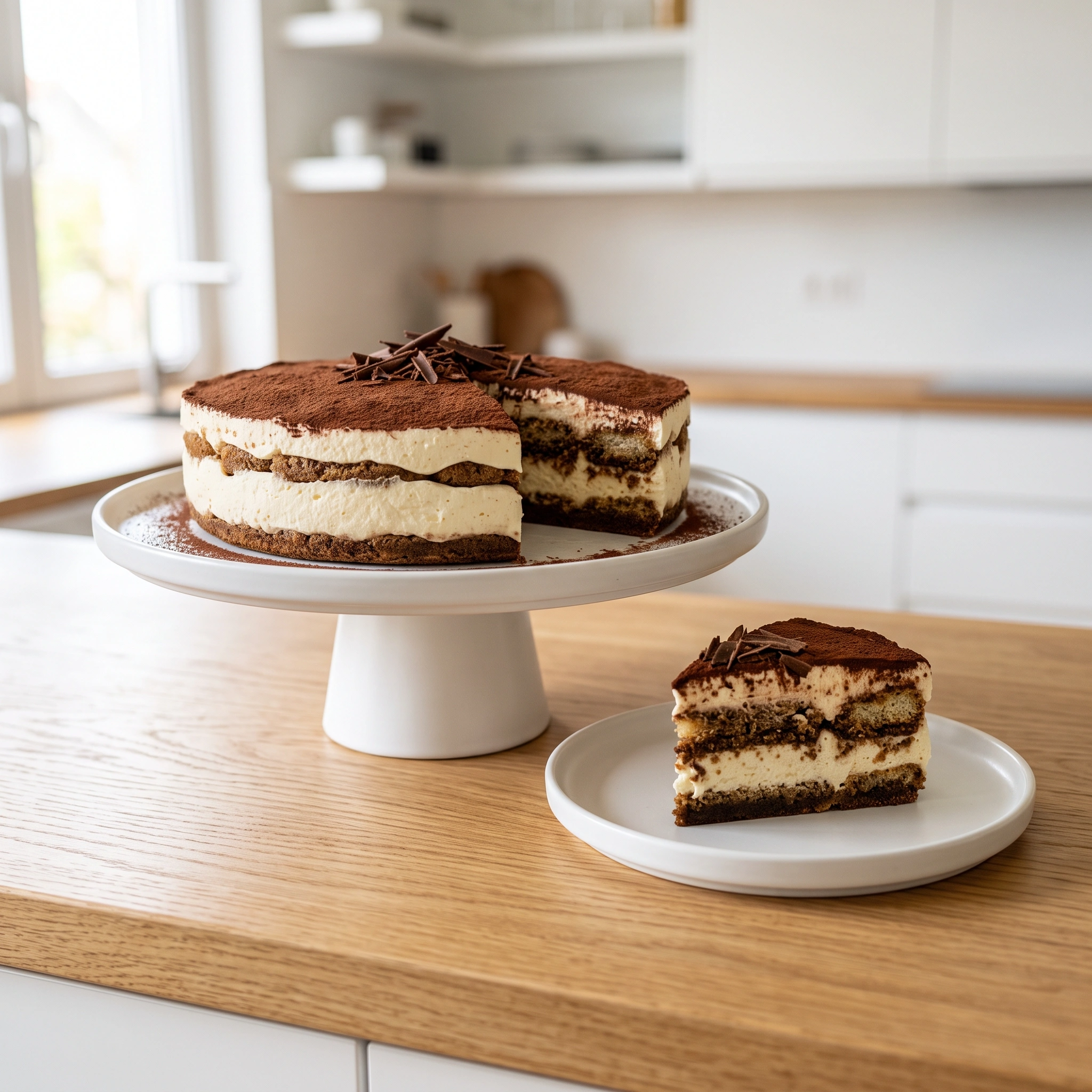
The Best Tiramisu Cake (No-Bake, Authentic Italian Style)
Ingredients
Equipment
Method
- Brew espresso, cool to room temperature. Stir in rum or Marsala. Pour into a shallow dish.
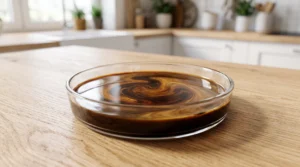
- Whisk egg yolks, half the sugar, and water over simmering water for 8 to 10 minutes until pale, thick, and doubled in volume (about 160 degrees F). Cool to room temperature.
- Beat room temperature mascarpone briefly until smooth. Fold in cooled egg yolk mixture gently.
- Whip cold heavy cream with remaining sugar and vanilla to soft-medium peaks. Fold into mascarpone mixture in 2 to 3 additions.
- Line a springform pan with parchment. Quickly dip ladyfingers (1 to 2 seconds per side) and arrange in a single layer.
- Spread half the cream over the ladyfingers. Repeat with a second layer of dipped ladyfingers and remaining cream.
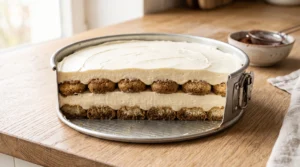
- Cover and refrigerate at least 6 hours, ideally overnight.
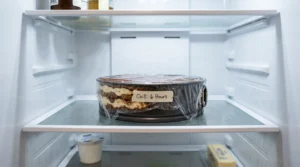
- Release springform sides. Dust generously with cocoa powder. Add chocolate shavings if desired. Slice and serve.
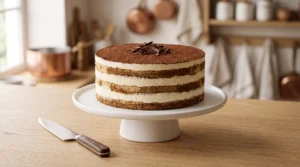
Notes
- Room temperature mascarpone is essential to avoid graininess and curdling.
- Dip ladyfingers quickly (1-2 seconds per side). Longer soaking causes sogginess.
- Do not overcook or undercook the egg yolk base — it should thicken visibly and double in volume.
- Fold mascarpone gently; never beat aggressively once combined with other ingredients.
- Full chill time is essential for clean slices. Minimum 6 hours, overnight preferred.
- Store refrigerated up to 4 days. Freezes well (without cocoa dusting) for up to 2 months.
Frequently Asked Questions
Is this tiramisu cake the same as a baked tiramisu layer cake?
No. This recipe is a true, no-bake tiramisu in the traditional Italian style, shaped in a springform pan so it can be sliced like a cake. A baked tiramisu layer cake is a different format entirely, using actual sponge cake layers soaked in coffee and frosted with mascarpone buttercream. Both are valid and delicious, but they are structurally and texturally different desserts.
Can I use whipped cream instead of making the egg yolk base?
You can, but the texture and authenticity will be noticeably different. The egg yolk base (zabaglione) is what gives traditional tiramisu its distinctive richness and custard-like body. A whipped-cream-only version will be lighter and less structured, closer to a mousse than classic tiramisu.
Are raw eggs safe in this recipe?
The egg yolks in this recipe are gently cooked over simmering water to a safe temperature of around 160 degrees F, which significantly reduces the risk associated with raw eggs. According to the FDA’s egg safety guidance egg mixtures cooked to 160 degrees F are considered safe for consumption. If you are serving anyone particularly vulnerable to foodborne illness, such as pregnant women, young children, or immunocompromised individuals, use pasteurized eggs as an additional precaution.
What can I use instead of ladyfingers?
Savoiardi ladyfingers are the traditional and recommended choice because their dry, porous texture absorbs the espresso soak perfectly without disintegrating. Thin sponge cake slices or trifle sponges can work in a pinch but will absorb liquid differently and may require less soaking time.
Related Recipes You Might Like