The Best Carrot Cake with Cream Cheese Frosting (Moist, Foolproof, From Scratch)
Bold claim incoming: this is the last carrot cake recipe you will ever need.
I do not say that lightly. Carrot cake is one of those recipes where every baker thinks theirs is the best, and where the difference between a good one and a truly great one is almost invisible in the ingredient list. Same flour. Same carrots. Same cream cheese. And yet the results vary enormously. The gap lives in the details: how fine you grate the carrots, whether you use oil or butter or both, how you handle the frosting temperature, and whether you understand what each ingredient is actually doing in the batter.
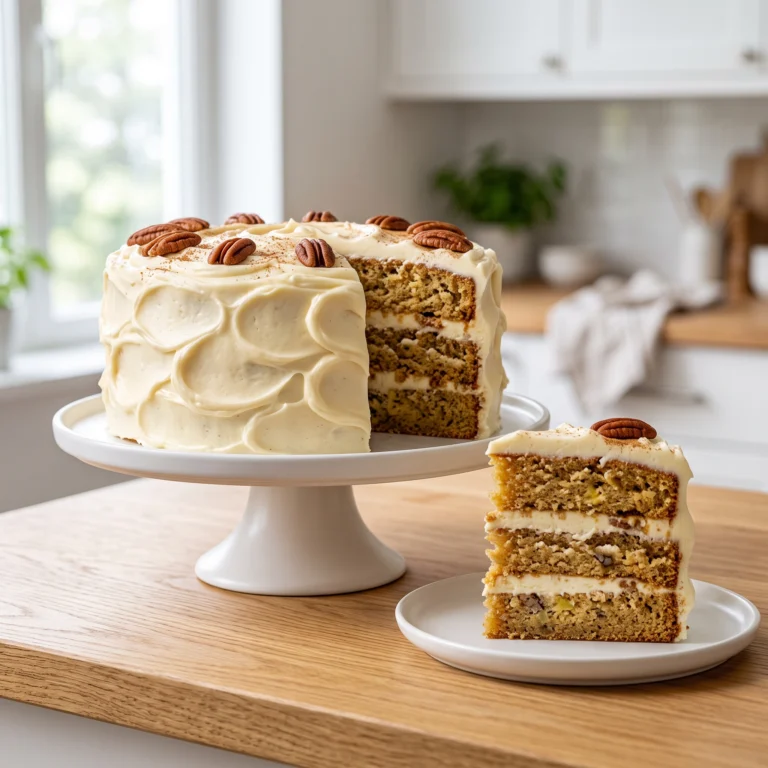
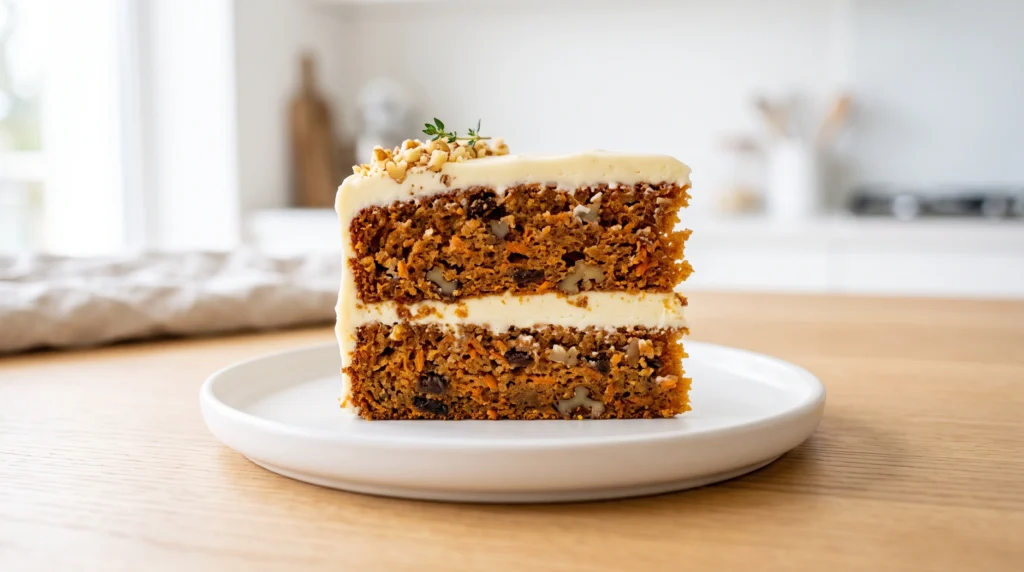
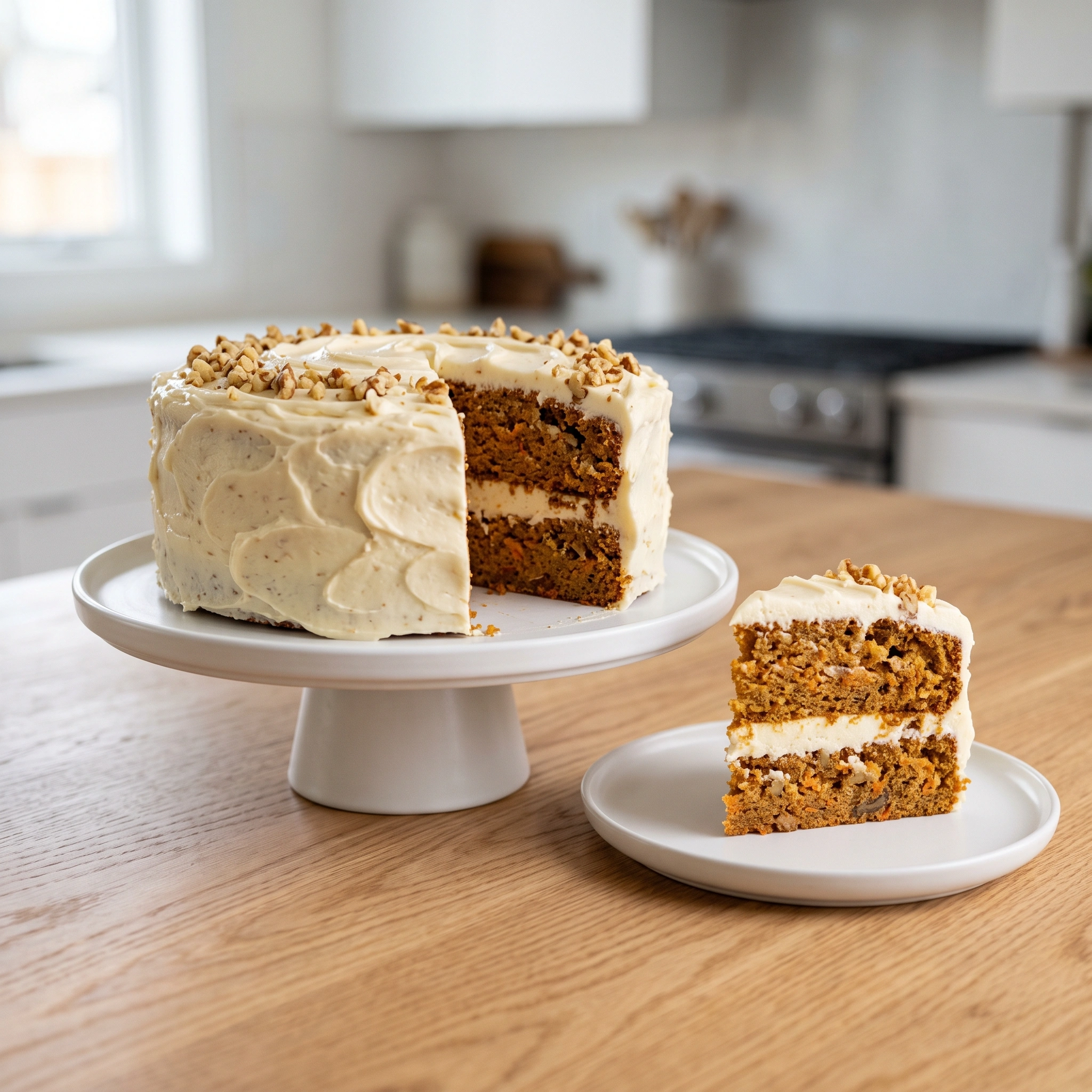
This recipe gets those details right. The cake layers are dense with moisture but not heavy. The spice blend is warm without being aggressive. And the cream cheese frosting is thick, tangy, and pipeable, none of that sliding-off-the-slice business that ruins Carrot Cake with Cream Cheese Frosting presentations everywhere.
Easter, birthday, potluck, Wednesday afternoon. This cake does not need an occasion.
Why You’ll Love This Carrot Cake
- Ultra-moist crumb that lasts for days. The combination of oil, brown sugar, and finely grated carrots keeps this cake soft from day one through day four.
- Thick, pipeable cream cheese frosting. No runny sliding frosting here. This version sets firmly and holds its shape for clean slices and beautiful piping.
- Beginner-friendly. No stand mixer needed for the cake batter itself, just a bowl and a whisk.
- Perfectly spiced, not overwhelming. A four-spice blend (cinnamon, nutmeg, ginger, allspice) that feels warm and complex without tasting like potpourri.
- Genuinely better the next day. Make it ahead with zero compromise on quality, actually an improvement.
- Freezer-friendly layers. Bake ahead, freeze, frost when needed.
- Works for every occasion. Easter, birthdays, potlucks, holidays, or a random Tuesday.
For the Cake Layers
- 2 cups all-purpose flour
- 2 teaspoons baking soda
- 1 teaspoon baking powder
- 1 1/2 teaspoons ground cinnamon
- 1/2 teaspoon ground nutmeg
- 1/4 teaspoon ground ginger
- 1/4 teaspoon ground allspice
- 1/2 teaspoon salt
- 1 cup granulated sugar
- 1 cup light brown sugar, packed
- 1 cup vegetable oil
- 4 large eggs, room temperature
- 2 teaspoons vanilla extract
- 3 cups finely grated fresh carrots (about 4 medium carrots)
- 1/2 cup crushed pineapple, well drained (optional but highly recommended)
- 1/2 cup chopped toasted walnuts or pecans (optional)
For the Cream Cheese Frosting
- 16 oz full-fat brick-style cream cheese (Philadelphia block, silver foil wrapper, not the tub), softened
- 1/2 cup unsalted butter, softened
- 4 cups powdered sugar, sifted
- 2 teaspoons vanilla extract
- Pinch of salt
- 1 tablespoon sour cream (optional but adds depth)
Recommended Equipment
- A box grater (fine side) or food processor with shredding blade
- Two 9-inch round cake pans
- A KitchenAid stand mixer or electric hand mixer
- A digital kitchen scale for accurate measurements
- An offset spatula for clean frosting
- A cake turntable for smooth, even sides
- A bench scraper for professional-looking finish
- Parchment paper rounds for easy layer removal
The One Thing Most Carrot Cake Recipes Get Wrong
Before the instructions, this needs to be said clearly: grate your carrots on the fine side of the box grater, not the large side. Most people use the large holes out of habit or because it is faster. The difference in the final cake is significant.
Large-grated carrots stay distinct inside the batter and release their moisture unevenly during baking, creating pockets of wet texture surrounded by drier crumb. Fine-grated carrots essentially dissolve into the batter as the cake bakes, distributing their moisture evenly throughout the crumb. This is the single biggest reason bakery carrot cakes feel uniformly moist from edge to center while home versions often feel inconsistently textured.
The second thing: drain the pineapple. If you leave excess liquid, it makes the batter too wet and the layers will not hold their shape when stacked. Press it through a sieve or squeeze it in paper towels until no more liquid runs out.
The Best Carrot Cake with Cream Cheese Frosting
Ingredients
Equipment
Method
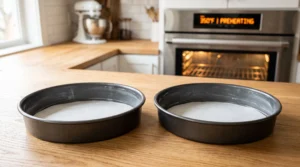
- Preheat oven to 350 degrees F. Grease two 9-inch pans, line with parchment, grease parchment.
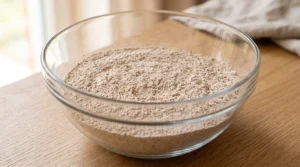
- Whisk together flour, baking soda, baking powder, all spices, and salt in a large bowl.
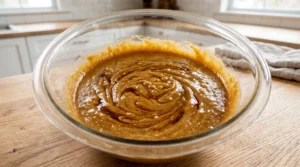
- In a separate bowl, whisk both sugars with oil until combined. Add eggs one at a time. Add vanilla.
- Add dry ingredients to wet and mix with a spatula until just combined.
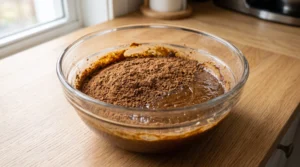
- Fold in finely grated carrots, drained pineapple, and nuts if using.
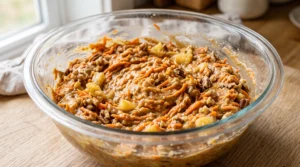
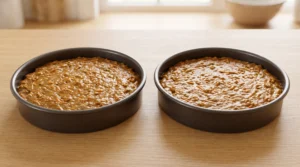
- Divide batter between prepared pans. Bake 30 to 35 minutes until a toothpick comes out clean.
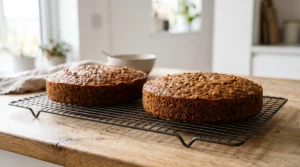
- Cool in pans 15 minutes, then turn onto a wire rack to cool completely before frosting.
- For frosting: beat cream cheese and butter until completely smooth, 2 to 3 minutes.
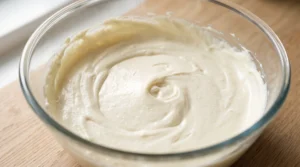
- Add powdered sugar one cup at a time on low speed. Add vanilla, salt, and sour cream.
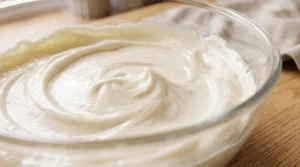
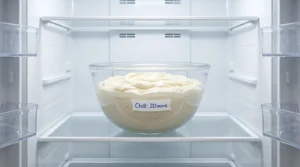
- Beat on medium for 1 minute until thick and smooth. Refrigerate 20 minutes if too soft.
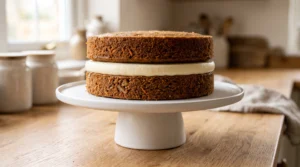
- Level layers if needed. Assemble with frosting between layers.
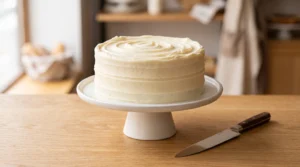
- Apply a thin crumb coat, refrigerate 20 minutes, then apply final frosting layer.
Notes
- Use the fine side of the box grater for carrots, not the large side. This is the most important tip.
- Drain pineapple very thoroughly before adding to avoid a wet batter.
- Use full-fat Philadelphia brick-style cream cheese only. Tub-style makes runny frosting.
- Cool layers completely before frosting, or the frosting will melt and slide.
- Flavor improves overnight. Make it a day ahead for best results.
- Refrigerate frosted cake for up to 5 days. Serve at room temperature.
Frequently Asked Questions
Why does carrot cake use oil instead of butter?
Oil produces a moister cake that stays soft for longer, including when refrigerated. Butter creates a slightly better flavor but solidifies when cold, which makes the crumb feel denser and drier after a night in the fridge. Since carrot cake with cream cheese frosting must be refrigerated for food safety reasons, oil is the right choice here. The carrots and brown sugar provide enough flavor complexity that the butter is not missed.
Why is my cream cheese frosting runny?
Almost always because of one of three things: cream cheese that was too warm when you started mixing, using tub-style cream cheese (which contains more water than brick-style), or overmixing, which can break down the structure and thin the frosting out. Use full-fat Philadelphia brick-style cream cheese, the block variety in the silver foil wrapper, not the tub. Make sure it is softened but not warm, and stop mixing the moment it becomes smooth and spreadable. King Arthur Baking’s guide on cream cheese frosting explains this in detail and confirms that fat content is the single biggest factor in frosting stability.
Can I make carrot cake ahead of time?
Yes, and it actually improves overnight. Bake the layers, cool completely, wrap tightly in plastic wrap, and refrigerate for up to 3 days or freeze for up to 3 months. Make the frosting separately and refrigerate it. Assemble the day before serving. The flavors meld in the refrigerator in a way that makes the spice profile noticeably more complex.
Is carrot cake only for Easter?
This is one of those food myths worth pushing back on. Carrot cake searches in the US are consistent year-round, with peaks around Easter and fall, but the cake itself has no seasonal limitations. The warm spices actually make it feel especially right in autumn and winter, and the cream cheese frosting keeps it light enough for summer tables. It is an all-occasion cake dressed up in Easter colors by tradition, not by necessity.
What nuts work best in carrot cake?
Toasted walnuts are the traditional choice and their slight bitterness balances the sweetness well. Pecans are softer and sweeter, which some people prefer. Toast either in a dry skillet over medium heat for 3 to 4 minutes before adding them. Untoasted nuts taste flat in baked goods, while toasted ones add a depth that makes a real difference in the finished cake.
Can I make this gluten-free?
Yes. Substitute the all-purpose flour with a 1-to-1 gluten-free baking blend such as Bob’s Red Mill 1:1 or King Arthur Measure for Measure. The oil-heavy batter is forgiving of flour substitutions, and the high moisture content from the carrots helps compensate for any textural differences.
Step-by-Step Instructions
Step 1: Prep Carrots and Pans
Preheat the oven to 350 degrees F. Grease two 9-inch round cake pans, line with parchment rounds, and grease the parchment. Peel and finely grate the carrots. If using pineapple, drain it thoroughly now.
Step 2: Mix Dry Ingredients
Whisk together the flour, baking soda, baking powder, all spices, and salt in a large bowl until evenly combined. Set aside.
Step 3: Mix Wet Ingredients
In a separate large bowl, whisk together both sugars and the oil until combined. Add the eggs one at a time, whisking well after each. Add the vanilla extract.
Step 4: Combine
Add the dry ingredients to the wet ingredients and mix with a rubber spatula until just combined. Do not use a mixer at this stage. Fold in the grated carrots, drained pineapple, and nuts if using. The batter will be thick and very fragrant.
Step 5: Bake
Divide the batter evenly between the prepared pans. Bake for 30 to 35 minutes, until a toothpick inserted in the center comes out clean or with a few moist crumbs. Let cool in pans for 15 minutes, then turn out onto a wire rack to cool completely. Completely. Do not rush this.
Step 6: Make the Frosting
Beat the softened cream cheese and butter together in a stand mixer until completely smooth, 2 to 3 minutes. Add the sifted powdered sugar one cup at a time on low speed. Add the vanilla, salt, and sour cream if using. Beat on medium for 1 minute until smooth and thick. If the frosting feels too soft, refrigerate for 20 minutes before using.
Step 7: Assemble
Level the cake layers if needed. Place one layer on a cake board or stand. Spread a generous layer of frosting on top. Add the second layer and apply a thin crumb coat over the entire cake. Refrigerate 20 minutes. Apply the final frosting layer. Decorate with toasted pecans, a sprinkle of cinnamon, or piped decorative carrots made from orange and green tinted frosting.
The Science: Why This Cake Stays Moist for Days
Carrots are approximately 88% water by weight, according to USDA FoodData Central . That is not a minor detail. It means that three cups of grated carrots contributes a significant amount of liquid to the batter, which bakes into the crumb as steam and stays there as bound moisture.
This is why carrot cake is structurally different from most other cakes. The moisture source is inside the solid ingredients rather than in the liquid ones. That moisture releases slowly and evenly during baking rather than all at once the way a liquid would, which is part of why the crumb stays uniformly moist.
Brown sugar contributes in a different way. It contains molasses, which is hygroscopic, meaning it actively draws moisture from the surrounding environment and holds onto it. A cake made with brown sugar stays softer longer than the same cake made with only white sugar. Using both, as this recipe does, captures the structural benefits of granulated sugar alongside the moisture-retention benefits of brown.
The cream cheese frosting is doing more than covering the cake. It seals the cut surface of the layers and slows moisture evaporation from the crumb, the same way a glaze protects a fruit tart from drying out. A fully frosted cake stored in the refrigerator will stay soft and moist for several days. Unfrosted layers in the same refrigerator will dry out noticeably faster.
Variations
Carrot Cake Sheet Cake
Pour all the batter into a greased 9×13-inch pan and bake for 35 to 40 minutes. Frost directly in the pan. This format serves a crowd without any stacking or leveling work and travels exceptionally well to potlucks.
Carrot Cake Cupcakes
Fill lined muffin tins two-thirds full and bake at 350 degrees F for 20 to 22 minutes. Makes approximately 24 cupcakes. Pipe the frosting using a large star tip for a bakery-style finish.
Carrot Bundt Cake
Pour batter into a well-greased 10-cup bundt pan. Bake at 350 degrees F for 50 to 55 minutes. Drizzle with a simple cream cheese glaze instead of thick frosting.
Spiced Maple Carrot Cake
Replace the granulated sugar with maple sugar and add 2 tablespoons of pure maple syrup to the frosting. The maple deepens the caramel notes from the brown sugar and makes the spices feel warmer.
Tropical Carrot Cake
Add the full half cup of crushed pineapple to the batter and fold in half a cup of shredded coconut. Top with toasted coconut on the outside of the frosted cake. This version is softer and slightly more fragrant than the classic.
Serving Ideas
Carrot cake with cream cheese frosting stands on its own as a complete dessert. A few additions make it feel more special for specific occasions.
For Easter or spring gatherings, pipe small decorative carrots from orange-tinted frosting with green tips made from green-tinted frosting. The visual is charming and recognizable. For fall birthday parties, a rim of crushed toasted pecans pressed into the sides of the frosted cake looks impressive with minimal effort.
Serve each slice with a small scoop of vanilla bean ice cream or a drizzle of caramel sauce. The cold creaminess against the warm-spiced cake is a combination that works every single time. For a casual serving option, skip the layer cake format and cut squares from a sheet cake, which requires no presentation skills and serves twice as many people with half the effort.
How to Store
Refrigerator: Cover the frosted cake tightly and refrigerate for up to 5 days. The flavor and texture are genuinely better on days 2 and 3 than on day 1. Serve at room temperature: remove the cake from the refrigerator at least 30 to 45 minutes before slicing.
Freezer: Unfrosted cake layers wrapped tightly in plastic wrap and foil freeze for up to 3 months. Thaw overnight in the refrigerator. Do not freeze the frosted assembled cake; cream cheese frosting does not thaw cleanly.
Individual slices: Wrap slices individually in plastic wrap and freeze for up to 1 month for easy single portions.
A Personal Note
I made this recipe for the first time during a particularly bleak January, which is not when anyone thinks to make carrot cake. The house smelled like cinnamon and warm sugar for the rest of the day, and when I pulled the finished cake out of the refrigerator the next morning for breakfast (yes, breakfast), I understood why every grandmother in America has a version of this recipe in a handwritten card somewhere.
It is a practical cake. It keeps well, travels well, feeds a crowd, and improves with time. It also happens to be one of the most genuinely satisfying things to bake from scratch, because the results look and taste like they required far more effort than they did.
Make it for Easter if you like. Make it for no reason at all if that feels right too.